

Hair Extension Removal
Ann Arbor, MI
Method-specific removal for tape-ins, nano beads and hand-tied wefts—followed by careful detangling, scalp evaluation and an honest recommendation for what your hair needs next.
Removal Is Not the End of the Service. It Is Part of Doing Extensions Correctly.
Hair extensions should never be pulled, peeled, cut or forced out simply because the client is ready for a change. Professional removal is a controlled process that respects the attachment method, the natural hair supporting it, the amount of regrowth, and the condition of the scalp and extension hair.
At Avissa Salon, we approach removal with the same care used during installation. We identify the method, release or open each attachment correctly, support the natural hair while the added hair is removed, and work through accumulated shed hairs without treating normal shedding as damage. Once the extensions are out, we evaluate density, breakage, scalp comfort, color condition and whether the hair is ready for reinstallation, a haircut, a hair color service or a temporary break.
The goal is not to remove extensions as quickly as possible. The goal is to remove them efficiently without creating avoidable stress—and to leave you with a clear understanding of the healthiest next step.
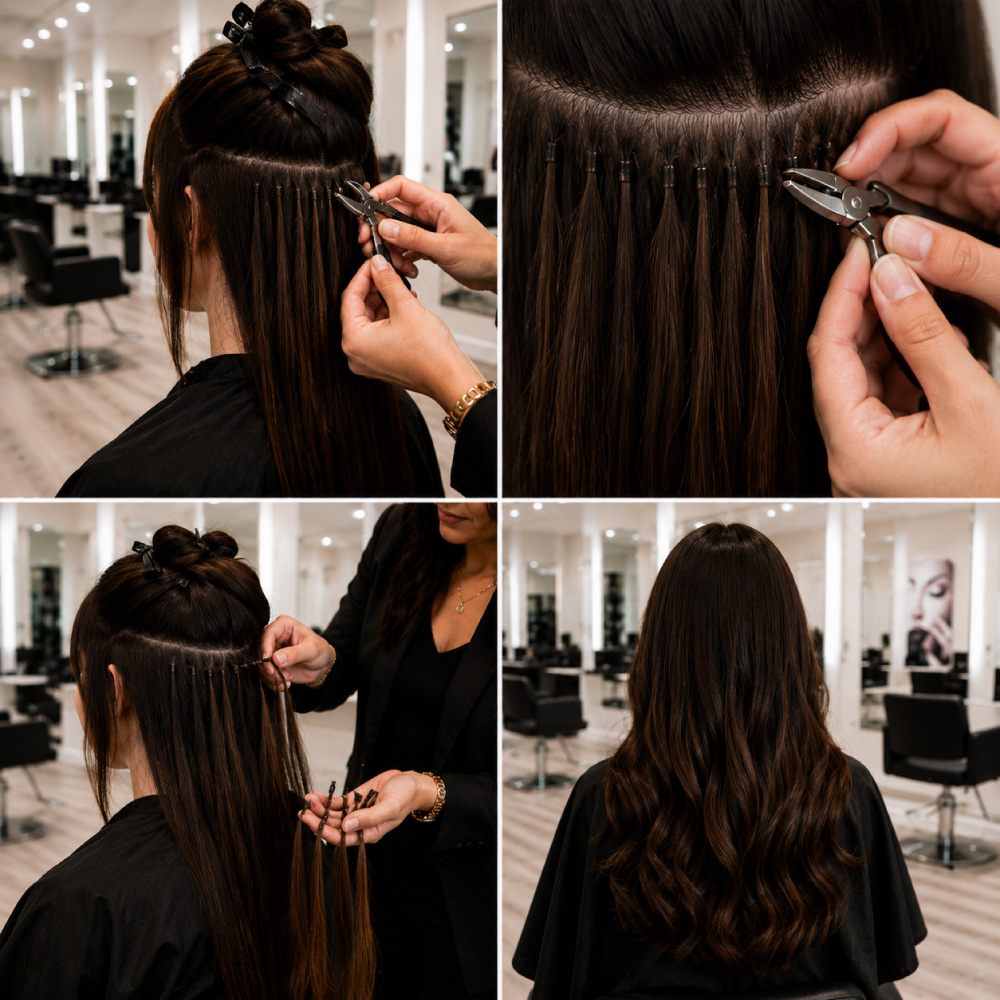
Why Professional Hair Extension Removal Matters
Every extension system creates a point of attachment. As the natural hair grows, shed hairs remain captured within that attachment until the service is removed or moved up. Oils, styling products, hard-water minerals and daily friction can also build around the roots. None of this automatically means the extensions caused damage, but it does mean the removal must be deliberate.
DIY removal commonly goes wrong when adhesive is not fully released, beads are dragged along the hair, thread is cut too close to the natural hair, or root tangles are brushed aggressively before they have been separated. A few rushed minutes can create breakage that a careful professional removal could have prevented.
Important Distinction
Seeing a collection of shed hair during removal can be alarming, but some captured shedding is expected because naturally released hairs cannot fall away while they remain inside an attachment. What matters is whether the remaining hair shows unusual breakage, thinning, scalp irritation or a tension pattern that requires a change in plan.
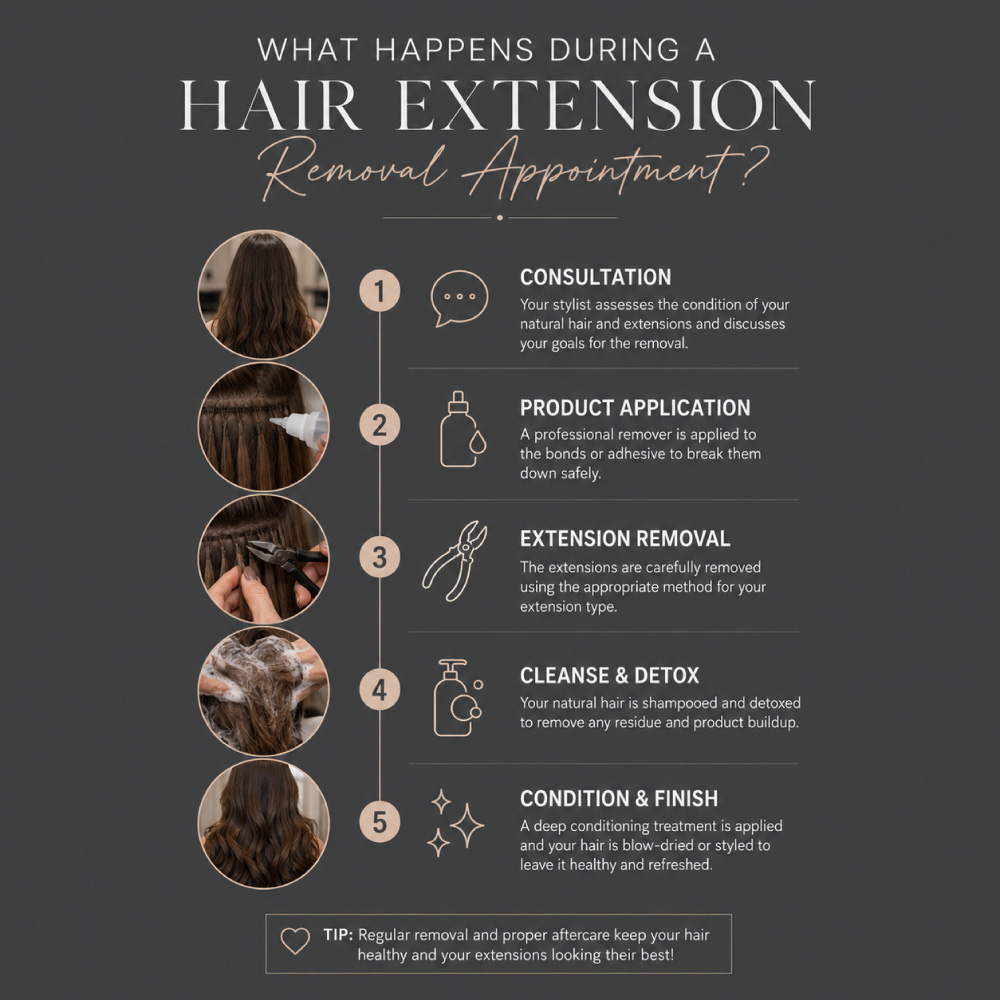
What Happens During a Hair Extension Removal Appointment?
The exact process depends on the method and condition of the installation, but a thorough appointment generally includes:
| • | Confirming the extension method, installation history and last maintenance date. |
| • | Examining the scalp, attachment points, regrowth, slippage, matting and product buildup. |
| • | Releasing, opening or unsewing attachments with tools and products appropriate to the method. |
| • | Supporting the natural hair while each extension is removed—never pulling against resistance. |
| • | Separating accumulated shed hairs and root tangles in small, controlled sections. |
| • | Removing method-specific residue where applicable. |
| • | Brushing, cleansing and conditioning as appropriate for the next planned service. |
| • | Assessing the natural hair and deciding whether immediate reinstallation, a modified method, a haircut, hair color or a rest period makes sense. |
An uncomplicated removal is different from corrective removal. If extensions are significantly overdue, matted, installed by another provider, mixed across methods, or accompanied by scalp discomfort, the appointment may require substantially more time.
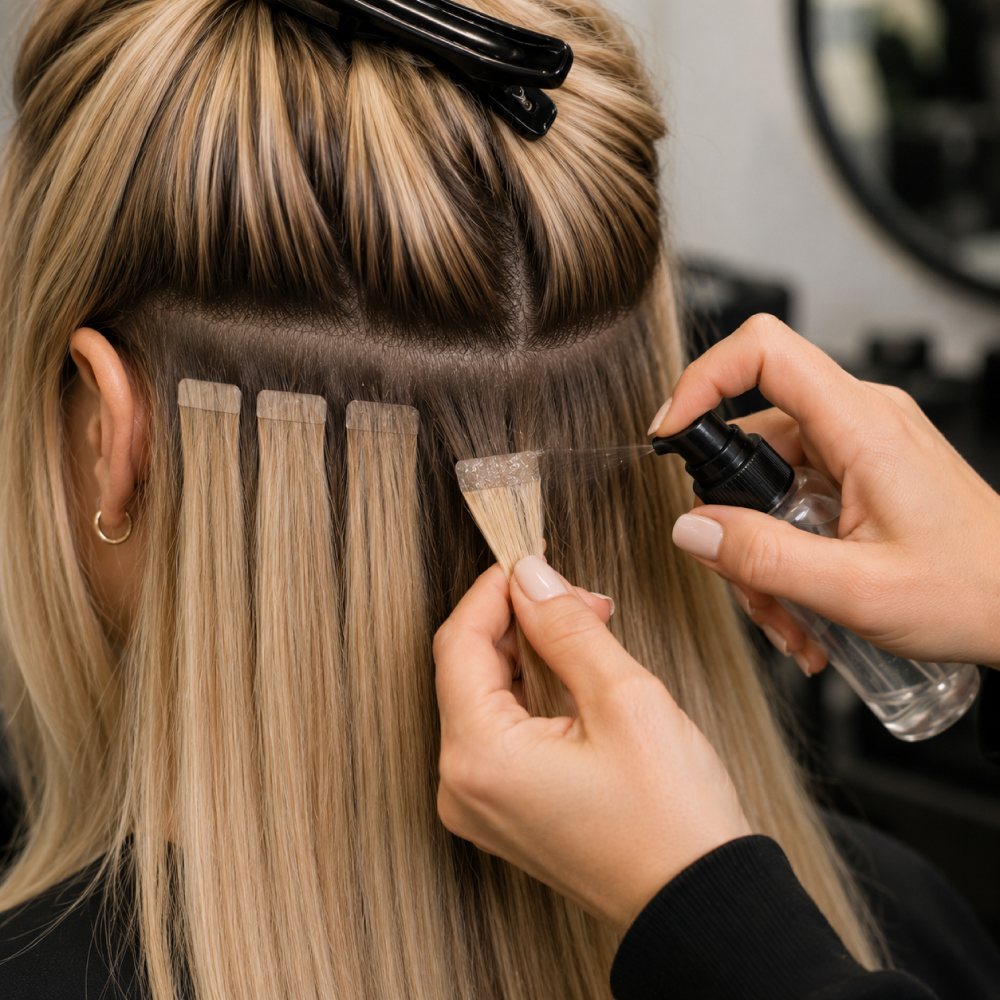
Tape-In Hair Extension Removal
Tape-ins are removed by applying a professional release product to the adhesive area and allowing the bond to loosen before the panels are separated. The extension should not be peeled away while the adhesive is still holding. Once removed, residual adhesive is addressed carefully, and the natural hair is detangled before cleansing or reapplication.
Removal becomes more complex when oil, dry shampoo, sunscreen, heat or incompatible products have altered the adhesive, when panels have folded or stuck to neighboring sections, or when the installation has been worn well beyond its planned maintenance interval. These conditions do not justify force; they require more patience and section-by-section work.
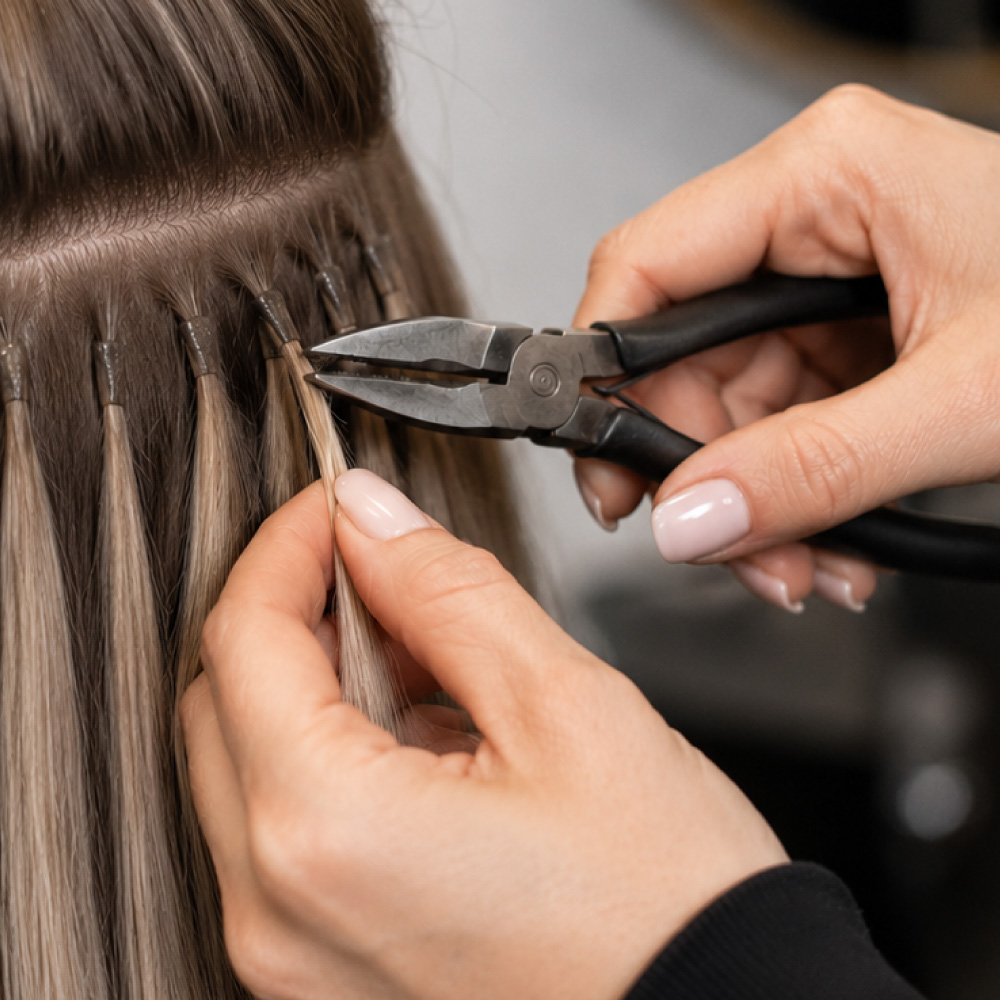
Nano Bead Hair Extension Removal
Nano bead removal requires opening each bead and allowing the individual attachment to slide away without dragging the bead through resistant hair. The stylist then separates the naturally shed hairs gathered around the root. Beads that have flattened, rotated, slipped, corroded or become surrounded by matting may require additional care and should never be crushed repeatedly against the natural hair.
Because nano beads are installed strand by strand, removal is detailed rather than dramatic. The safest process is methodical: open, support, release, separate and reassess each area before moving on.
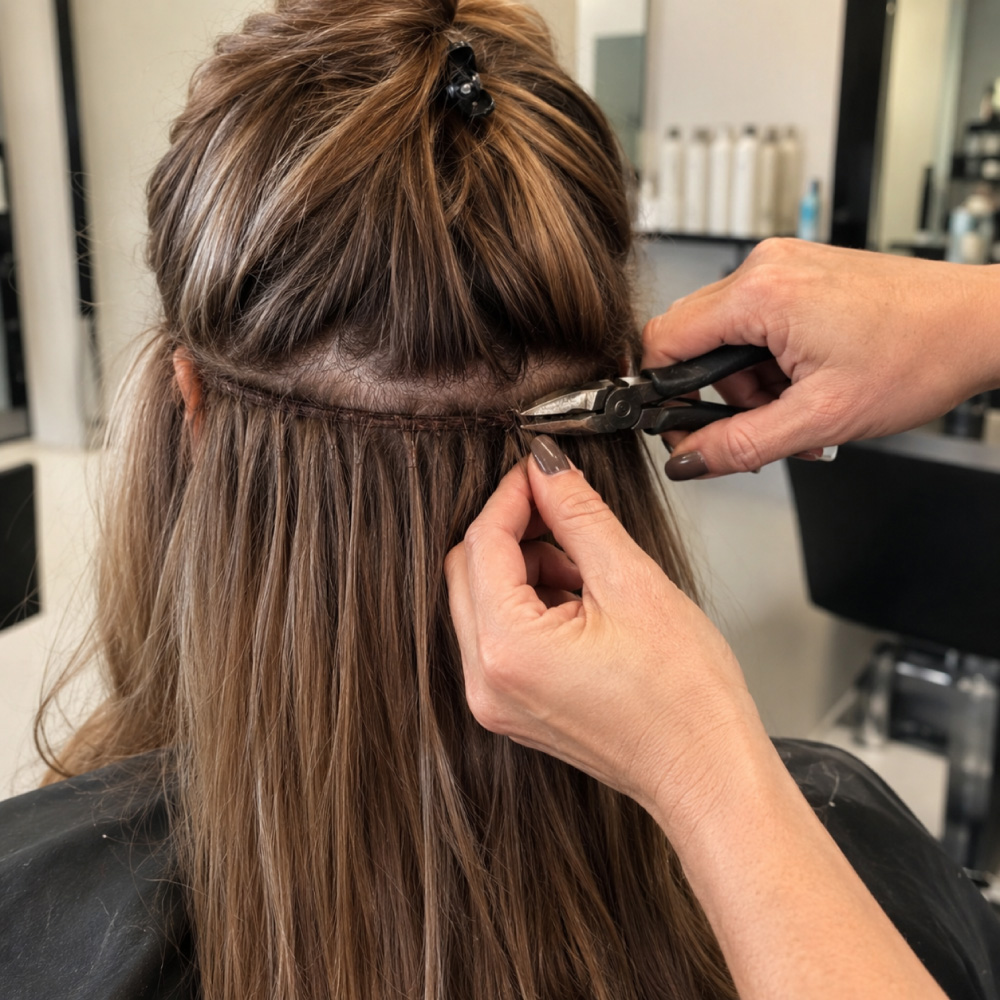
Hand-Tied Weft Hair Extension Removal
Hand-tied weft removal begins by identifying the row construction and carefully cutting the sewing thread—not the natural hair or the weft seam. Once the weft is lifted away, the supporting bead foundation is opened and removed. The stylist then separates shed hairs and evaluates the row for tension, matting, scalp irritation and changes in natural density.
Corrective weft removal can take longer when thread has tightened, rows have flipped, stitching has loosened unevenly, multiple wefts are stacked heavily, or the natural hair has matted between beads. Cutting into a row without clearly seeing the thread is one of the most serious risks of attempting removal at home.
Tape-Ins vs. Nano Beads vs. Hand-Tied Wefts:
What Changes at Removal?
| Removal factor | Tape-ins | Nano beads | Hand-tied wefts |
| Primary release step | Professional adhesive release and controlled separation | Open each bead and slide the attachment away without pulling | Cut and remove thread, then open/remove supporting beads |
| Typical complexity | Moderate; increases with residue, matting or overdue wear | Detailed and repetitive; each attachment is handled separately | Highly dependent on row condition, stitching and matting |
| Main risk of DIY removal | Pulling adhesive panels apart before fully released | Dragging or crushing beads and breaking support hairs | Cutting natural hair or pulling through an entangled row |
| Hair assessment after removal | Adhesive residue, shedding, tangles, scalp condition | Slippage, bead condition, tension pattern, root tangles | Row tension, shed-hair accumulation, scalp and density changes |
| Same-day reinstall? | Sometimes, after cleansing and reassessment | Sometimes, if natural hair and attachments are healthy | Sometimes, if scalp, density and row pattern remain appropriate |
The safest removal is not defined by one universal technique. It is defined by correctly identifying the method and responding to the condition actually present on the day of service.
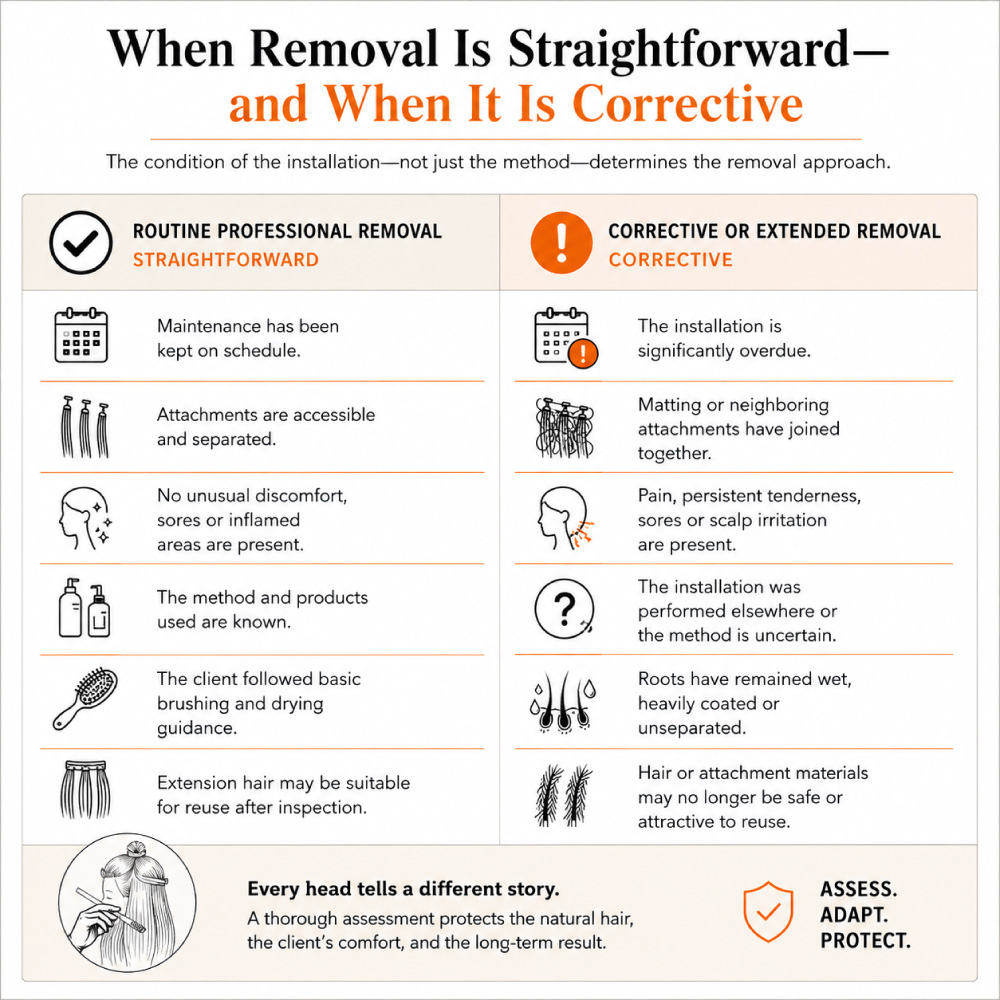
When Removal Is Straightforward—and When It Is Corrective
| Routine professional removal | Corrective or extended removal |
| Maintenance has been kept on schedule. | The installation is significantly overdue. |
| Attachments are accessible and separated. | Matting or neighboring attachments have joined together. |
| No unusual discomfort, sores or inflamed areas are present. | Pain, persistent tenderness, sores or scalp irritation are present. |
| The method and products used are known. | The installation was performed elsewhere or the method is uncertain. |
| The client followed basic brushing and drying guidance. | Roots have remained wet, heavily coated or unseparated. |
| Extension hair may be suitable for reuse after inspection. | Hair or attachment materials may no longer be safe or attractive to reuse. |
If your extensions are overdue or tangled, tell us when booking. This helps us reserve enough time and prepare for the correct service rather than rushing a situation that requires careful work.
Signs You Should Schedule Removal or Evaluation Now
| • | Persistent pain, tenderness, itching or burning around attachments.Visible thinning or short broken hairs near a row, bead or tape panel. |
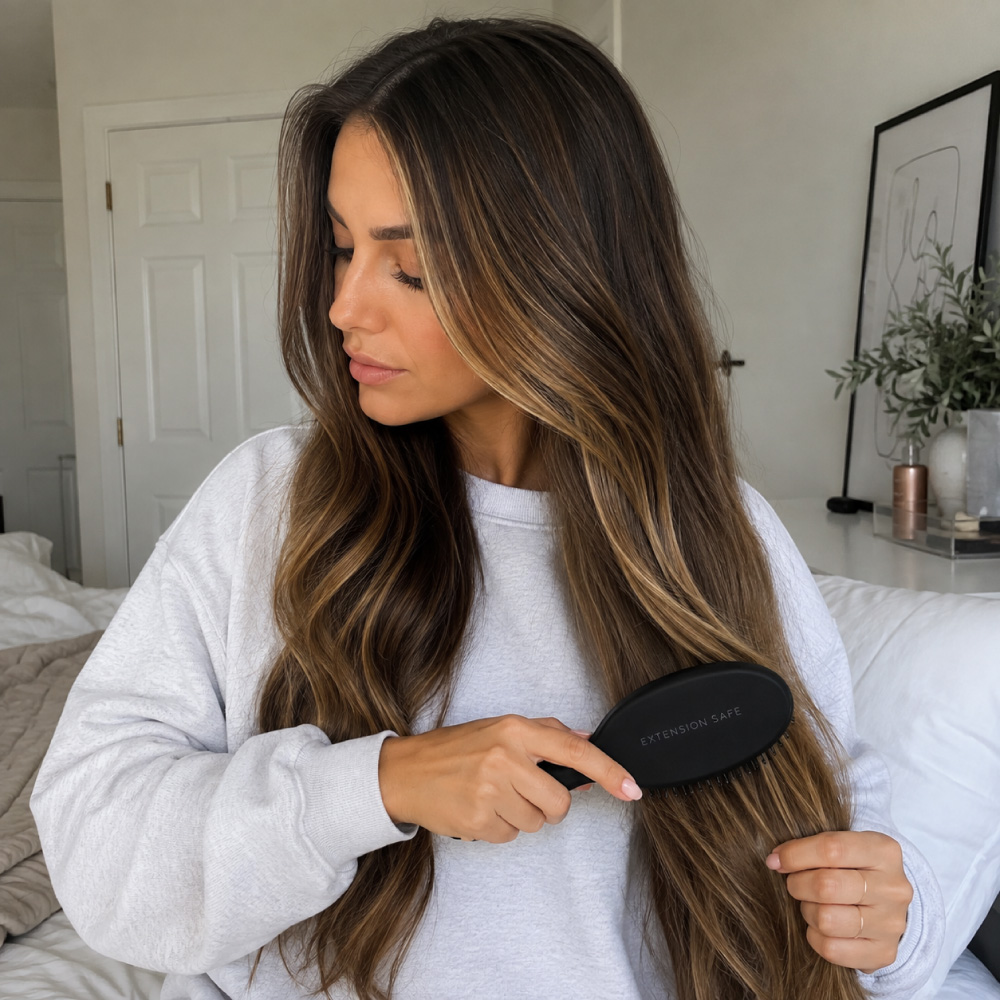
| • | Support the attachment area while brushing the lengths. |
| • | Matting at the roots that does not release with gentle daily separation. |
| • | Brush underneath the rows and between attachment zones rather than only over the top layer. |
| • | Attachments that have twisted, folded, migrated, flipped or become exposed. |
| • | Tape panels separating, folding, becoming gummy or sticking to neighboring hair. |
| • | Weft stitching that is loose, broken or pulling unevenly. |
| • | An odor or scalp condition that persists after cleansing and drying. |
| • | You are past the maintenance interval recommended by your extension specialist. |
| • | You no longer want the extensions and are tempted to remove them yourself. |
Do not wait for visible damage
Discomfort is not a normal price of wearing extensions. Contact the salon when a section feels wrong. Early evaluation is usually simpler than correcting a problem after several additional weeks of tension, tangling or slippage.
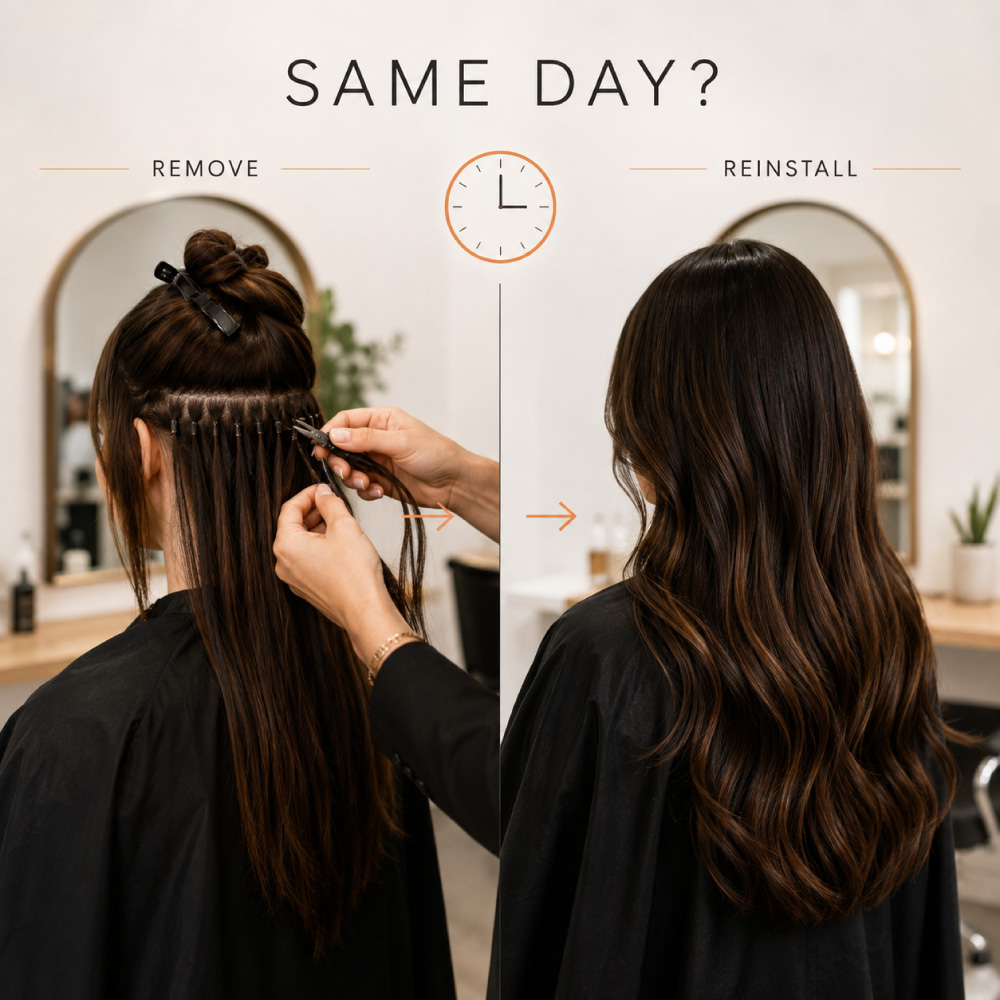
Can Extensions Be Removed and Reinstalled the Same Day?
Sometimes. Same-day reinstallation depends on the natural hair, scalp, attachment condition, extension-hair quality, maintenance history and the reason for removal. A client whose extensions are on schedule and whose natural hair is healthy may be an excellent candidate for a move-up or reapplication. A client with matting, irritation, unusual breakage, excessive residue or a major change in density may need a modified plan or a break.
We do not promise automatic reinstallation before seeing the hair. The decision is made after removal because that is when the true condition of the support hair and scalp becomes visible.
Reasons we may delay or modify reinstallation
| • | The scalp is irritated, inflamed or painful. |
| • | The natural hair shows breakage or density loss that changes safe placement. |
| • | Root tangles require more detangling than expected. |
| • | The extension hair has lost too much density, softness or integrity for a polished result. |
| • | The previous method no longer matches the client’s hair, lifestyle or maintenance habits. |
| • | A hair color correction, significant haircut or other service should be completed first. |
| • | The client would benefit from fewer extensions, lighter weight or a different attachment pattern. |
What Your Hair May Look and Feel Like Immediately After Removal
After months of wearing added length and density, your natural hair can initially feel lighter, shorter or less full—even when its condition is healthy. That contrast is normal. You may also see accumulated shed hairs during detangling. Those hairs would ordinarily have fallen throughout the weeks of wear but remained captured near the attachments.
What is not dismissed as normal is concentrated breakage, visible thinning at attachment points, scalp wounds, persistent pain or an obvious tension pattern. These findings should be discussed honestly, documented when appropriate, and used to guide the next installation plan.
Detangling After Removal: Why It Cannot Be Rushed
Root tangles after extension removal are a mixture of naturally shed hair, product buildup and neighboring strands that have wrapped together. The safest approach is to work in small sections, support the hair close to the root, soften residue where appropriate and separate the tangle gradually before brushing through the lengths.
Aggressive brushing may make the appointment feel faster, but it can convert a manageable root tangle into unnecessary breakage. Corrective detangling may need to be priced and scheduled separately when matting is extensive because the service is based on time and complexity, not merely the number of extensions removed.
Hair Color After Extension Removal
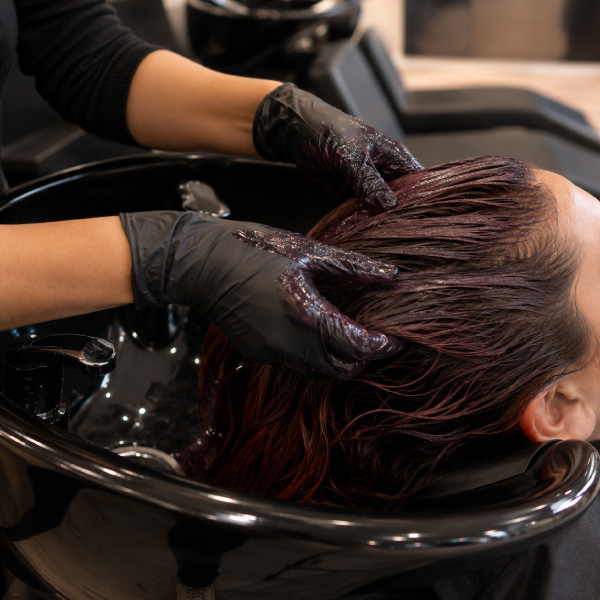
Removal is often the best moment to reassess hair color because the natural hair is fully visible and the previous extension blend can be evaluated honestly. Root touch-ups, gray coverage, toners, highlights and dimensional hair color may be coordinated before reinstallation—but the service order depends on the extension method, scalp condition and color plan.
We do not recommend applying strong lightening or corrective color automatically just because the extensions are out. The hair should first be evaluated for porosity, breakage, density and previous chemical history. In some cases, a gloss, toner or subtle color adjustment is enough to improve the next blend. In others, color and extensions should be scheduled as separate appointments.
Color Questions We Consider Before Hair Extension Reinstallation
| • | Does the natural hair need root coverage or gray coverage before attachments are placed? |
| • | Has the natural hair faded differently from the extension hair? |
| • | Do blonde, brunette, balayage or highlighted sections need refinement for a seamless match? |
| • | Can the extension hair still be reused without compromising the color result? |
| • | Would a color correction place too much stress on the hair before another installation? |
| • | Should the placement map change because the hair color pattern has changed? |
Do You Need a Haircut After Hair Extension Removal?
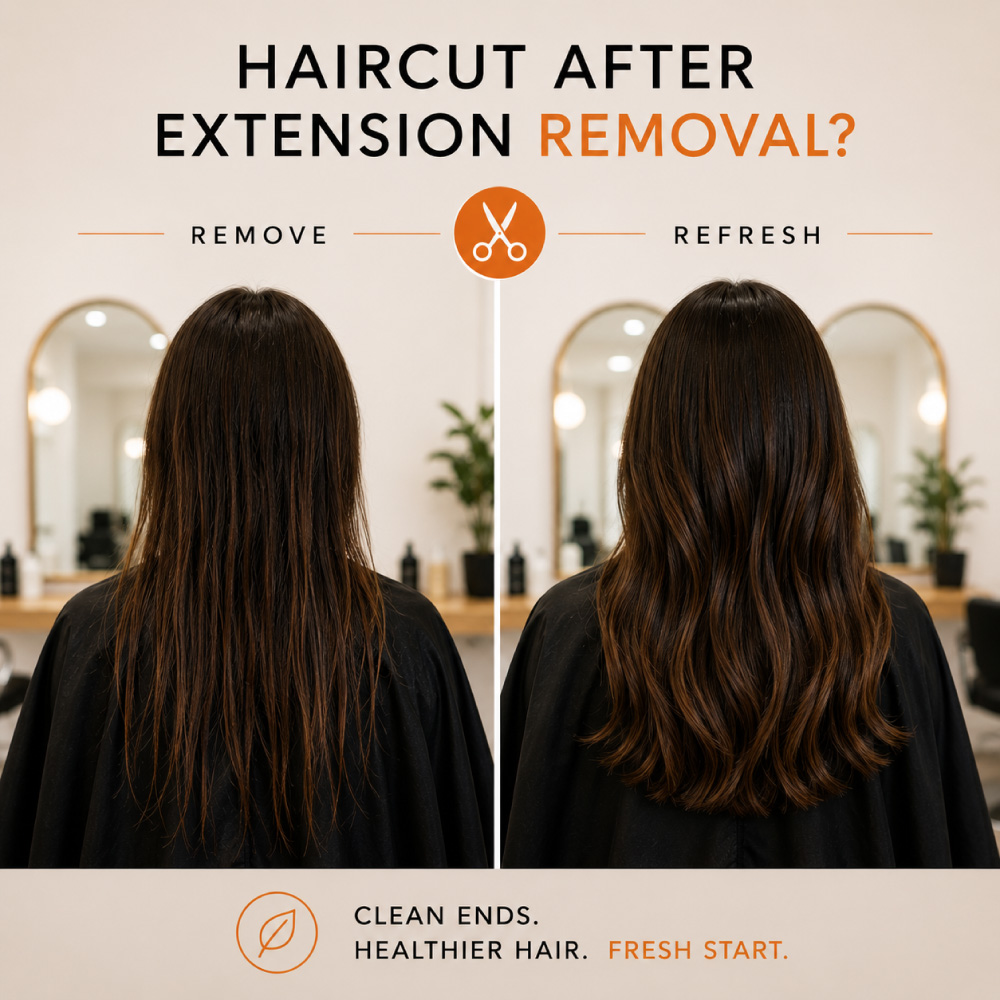
Not automatically—but the haircut should be assessed. Extensions are usually cut and blended into a specific finished shape. Once they are removed, natural layers may feel uneven, ends may need refinement, or the perimeter may no longer support the way you want to wear your hair without extensions.
A conservative haircut can restore shape, remove compromised ends and make the transition back to natural hair feel intentional. If you are reinstalling extensions, the haircut may be planned around the new method and placement rather than completed as a separate conventional cut.
Can Hair Extensions Damage Natural Hair?
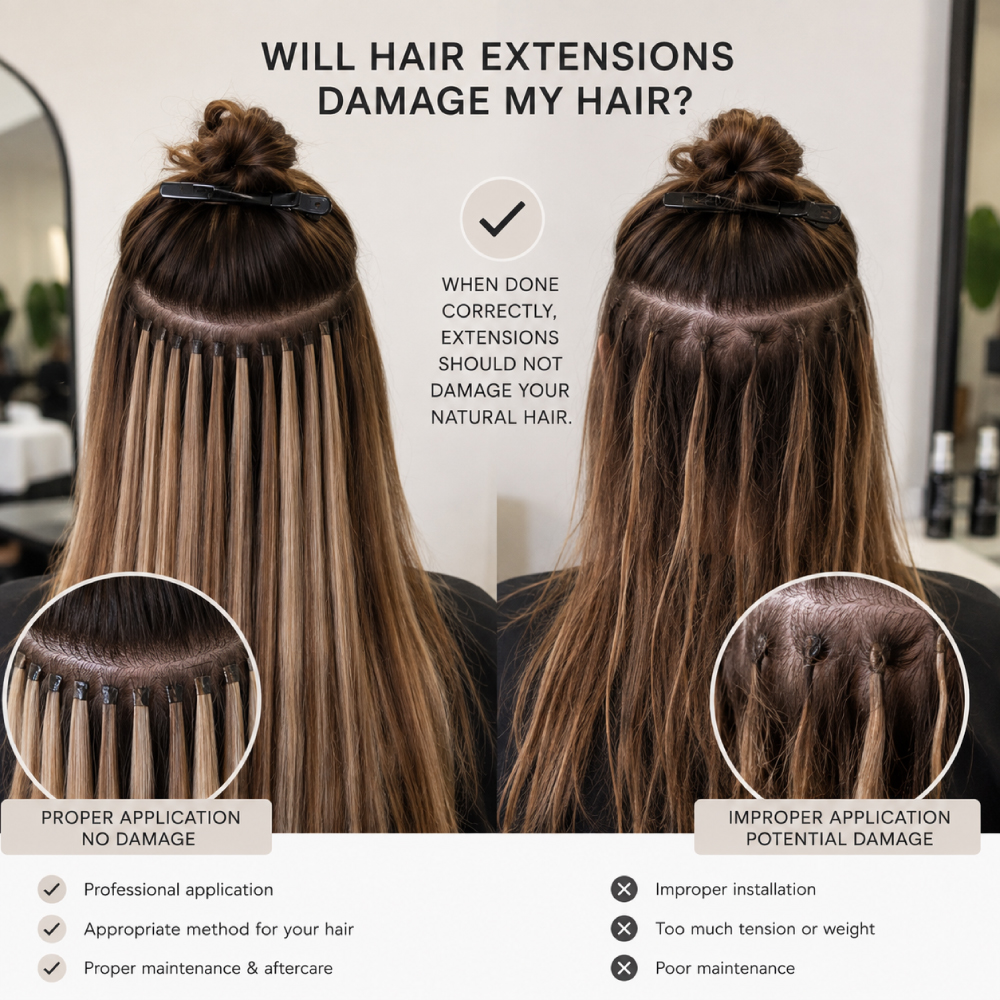
Any extension method can contribute to breakage or traction when the weight, section size, placement, maintenance schedule or home care is inappropriate. The method alone does not determine safety. A well-selected system installed and maintained responsibly may be worn successfully by many clients, while the same method can be a poor choice for another person’s density, scalp condition or lifestyle.
Professional removal reduces avoidable damage, but it cannot reverse stress that occurred during months of wear. That is why honest consultation, scheduled maintenance and early evaluation of discomfort matter as much as the removal appointment itself.
What Not to Do Before Your Removal Appointment
| • | Do not pull, peel, slide or cut attachments at home. |
| • | Do not saturate the roots with random oils or solvents in an attempt to loosen a method. |
| • | Do not tighten, crimp or restitch loose attachments yourself. |
| • | Do not aggressively brush through matting before the stylist can examine it. |
| • | Do not arrive with wet hair unless instructed. |
| • | Do not conceal pain, sores, matting or the true date of your last maintenance appointment. |
| • | Do not assume extension hair can be reused until it has been evaluated. |
How to prepare for Your Hair Extension Removal Appointment Instead
| • | Tell us the method, brand if known, installation date and last maintenance date. |
| • | Send clear photos of the roots if you have matting, slippage or an unfamiliar installation. |
| • | Explain whether you want complete removal, maintenance, reinstallation or a method change. |
| • | Arrive with dry hair that has not been coated in heavy oil unless your stylist gives different instructions. |
| • | Reserve adequate time; corrective removal cannot be responsibly rushed. |
Removing Extensions Installed at Another Salon
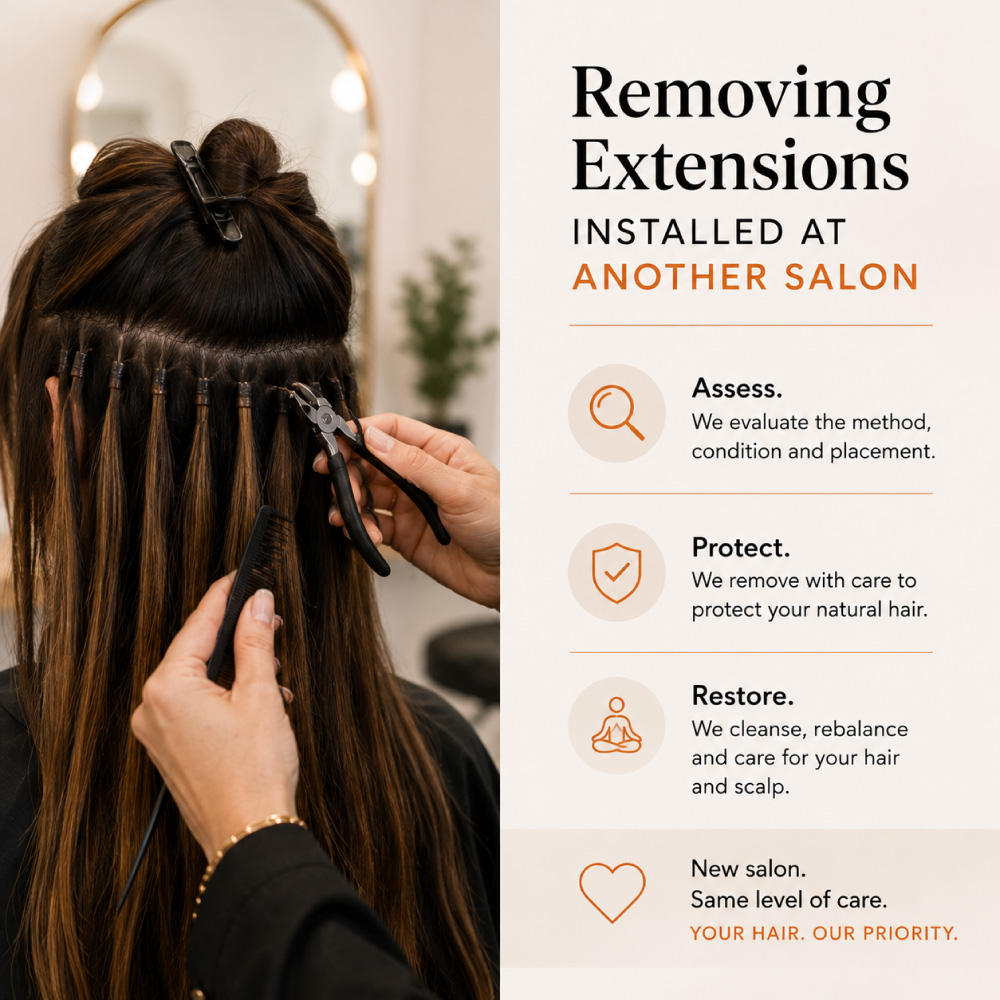
Any extension method can contribute to breakage or traction when the weight, section size, placement, maintenance schedule or home care is inappropriate. The method alone does not determine safety. A well-selected system installed and maintained responsibly may be worn successfully by many clients, while the same method can be a poor choice for another person’s density, scalp condition or lifestyle.
Professional removal reduces avoidable damage, but it cannot reverse stress that occurred during months of wear. That is why honest consultation, scheduled maintenance and early evaluation of discomfort matter as much as the removal appointment itself.
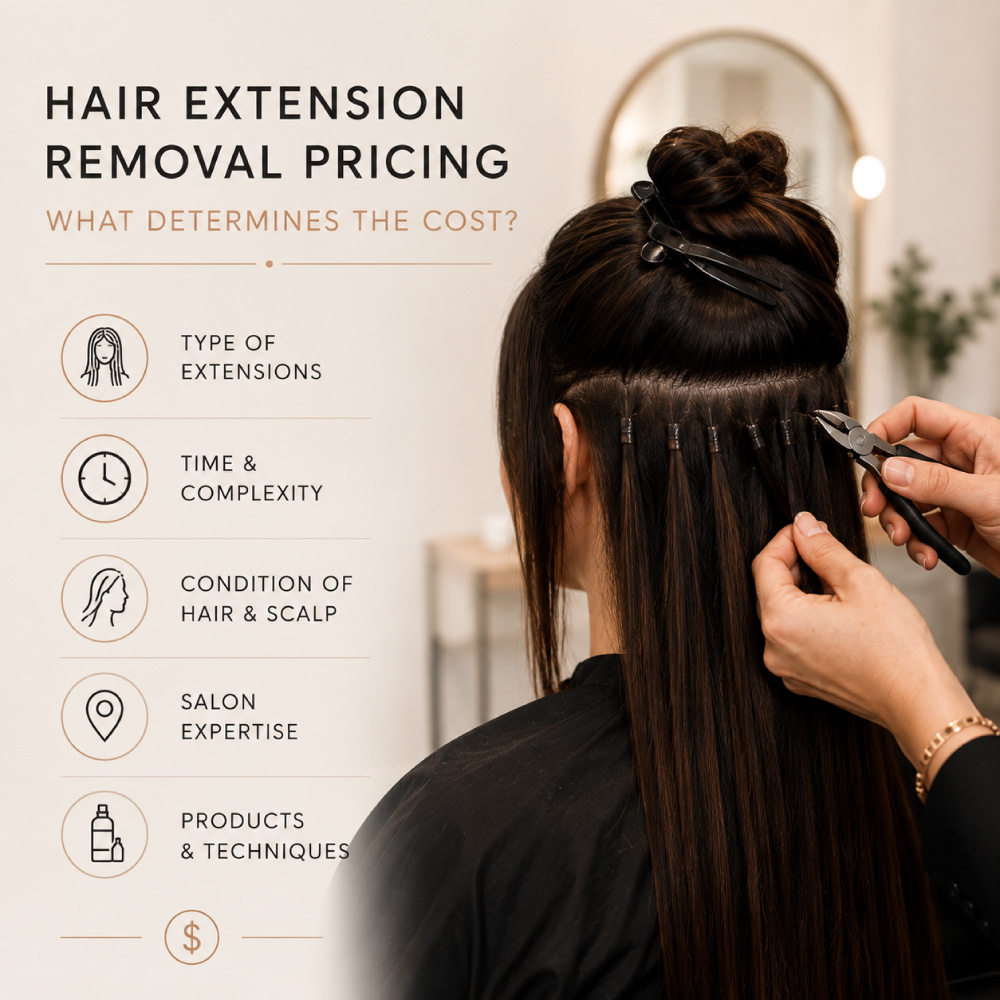
Hair Extension Removal Pricing: What Determines the Cost?
Removal pricing should reflect the time, method and complexity involved. A routine, on-schedule removal is not equivalent to a corrective appointment involving matting, mixed methods, heavy residue, damaged attachments or extensive detangling.
| • | Extension method and total amount of installed hair. |
| • | Number of rows, panels or individual attachments. |
| • | Time since the last maintenance appointment. |
| • | Condition of the roots, scalp and attachment materials. |
| • | Amount of adhesive residue or product buildup. |
| • | Presence and severity of matting. |
| • | Whether cleansing, detangling, color, haircut or reinstallation is included. |
| • | Whether the work was installed by Avissa Salon or another provider. |
A consultation or clear pre-appointment photos may be required before we estimate corrective removal. The priority is to reserve enough time to work safely—not to promise a low price based on incomplete information.
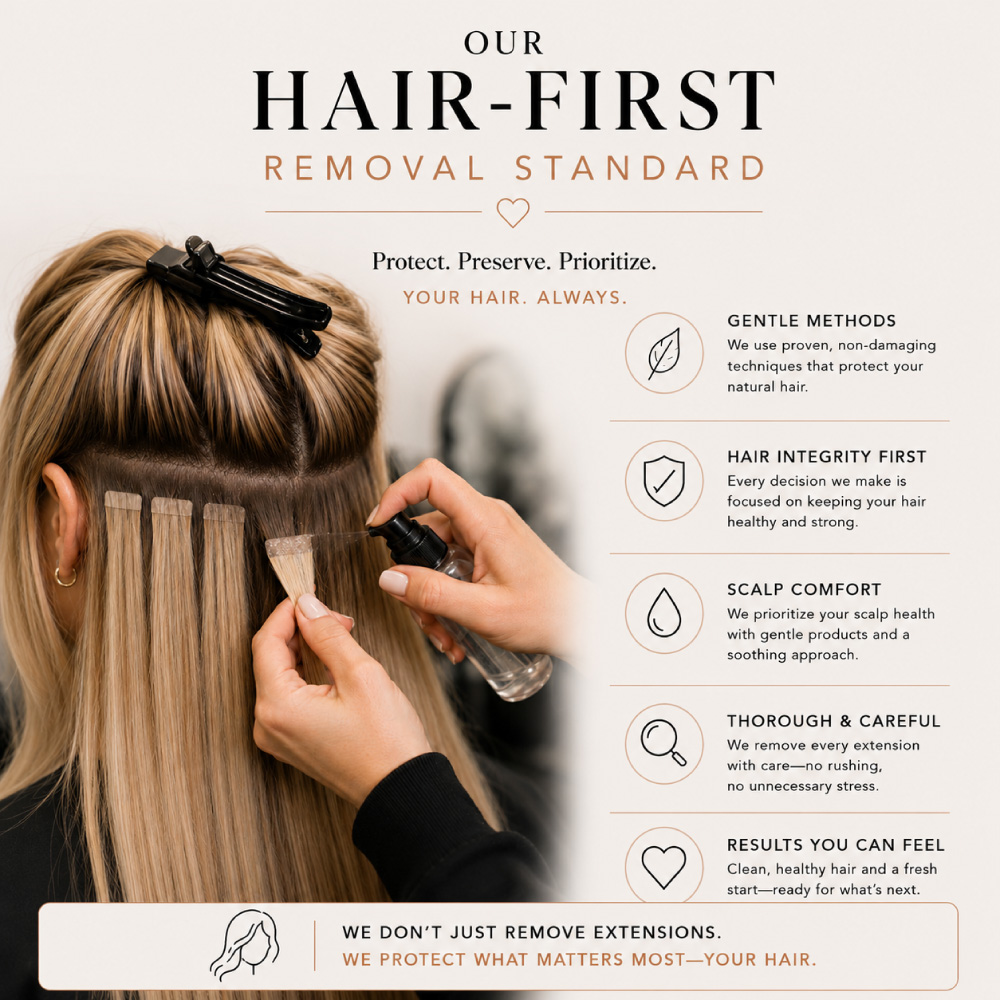
Our Hair-First Removal Standard
At Avissa Salon, extension removal is guided by four principles:
| • | Identify the method before touching the attachment. |
| • | Never force an extension that has not been fully released or opened. |
| • | Treat detangling and residue removal as skilled work, not an inconvenience. |
| • | Use the condition of the natural hair—not the client’s original plan—to determine what happens next. |
Sometimes the best next step is reinstallation. Sometimes it is fewer extensions, a different method, a haircut, a hair color adjustment or a pause. The recommendation should be based on what the hair can support safely and what the client can maintain consistently.
Frequently Asked Questions (Hair Extensions Removal)
Can I remove hair extensions at home?
We strongly recommend professional removal. Tape adhesive must be fully released, beads must be opened correctly, and sewn rows must be unthreaded without cutting natural hair. DIY removal can cause avoidable breakage, matting and scalp stress.
How long does hair extension removal take?
Timing depends on the method, amount of hair, maintenance history and condition of the roots. A routine removal may be relatively efficient; an overdue or matted installation can require substantially more time and corrective detangling.
Is shedding during removal normal?
Some captured shedding is expected because naturally released hairs remain trapped within the attachments until removal. Concentrated breakage, visible thinning, pain or scalp irritation is different and should be assessed.
Can my extension hair be reused?
Possibly. Reuse depends on the method, hair quality, remaining density, color condition, attachment integrity and home care. Extension hair should be inspected before reuse is promised.
Can I reinstall extensions immediately after removal?
Sometimes. Same-day reinstallation is appropriate only when the scalp and natural hair are healthy and the extension plan remains suitable. Irritation, breakage, matting, density changes or corrective color may require a modified timeline.
Should I wash my hair before removal?
Follow the salon’s preparation instructions. In many cases, dry hair without heavy oil is easiest to evaluate and remove, but the recommendation can vary by method and condition.
Can you remove extensions installed by another salon?
We can evaluate outside work. Photos or a consultation may be needed to identify the method, estimate time and determine whether the extension hair or materials can be reused.
Will my hair feel thin after extensions are removed?
It may feel lighter because you have become accustomed to added density and length. That sensation does not automatically indicate damage. We assess the actual density, breakage pattern, scalp condition and overall hair quality after removal.
Can I have hair color or a haircut after removal?
Often, yes. Removal can be coordinated with hair color, a toner, gray coverage or a haircut, but the safest service order depends on your hair condition and whether extensions will be reinstalled.
What should I do if my extensions are painful or matted?
Contact the salon promptly and avoid pulling, cutting or applying random removal products. Early professional evaluation is usually safer and simpler than waiting for the problem to worsen.
Ready for a Safe, Professional Removal?
Whether you are due for a move-up, changing extension methods, taking a break or correcting an overdue installation, the first step is an accurate assessment. Schedule hair extension removal at Avissa Salon so we can identify the method, protect your natural hair and help you choose the healthiest next step.
Related Links & Services
Learn more about Hair Extensions and discover additional services that complement your appointment and help you achieve your beauty goals.