

Brazilian & Bikini Wax
Ann Arbor, MI
Private, precise waxing with clear choices, thoughtful skin screening and aftercare that supports a smoother, more comfortable result.
The Best Waxing Appointment Begins Before the Wax Is Applied
A Brazilian or bikini wax is personal. The quality of the service depends on more than removing hair—it depends on communication, sanitation, skin assessment, controlled technique and knowing when waxing should be modified or postponed.
At Avissa Salon, we begin by confirming what you want removed and what you prefer to leave. There is no assumption that every guest wants the same shape or degree of removal. A first-time guest may choose a conservative bikini line cleanup, a more extended bikini wax or a full Brazilian. The service should match your comfort level, not a preset script.
We also review factors that may affect skin safety, including recent sun exposure, active irritation, exfoliating products, retinoids, prescription acne medications, recent procedures and previous waxing reactions. Honest screening protects the skin and helps set realistic expectations.
Our Approach
No rushed explanations. No pressure to remove more than you requested. No pretending that every skin type reacts the same way. The goal is a clean result delivered with discretion and professional judgment.
Brazilian Wax vs. Bikini Wax: What Is the Difference?
The terms are often used loosely, so the most important step is to describe the result you want. At Avissa Salon, we clarify the treatment area before the service begins.
Service definitions can vary between businesses. Your esthetician should confirm the exact area and shape before beginning so there are no surprises.
| Service | Typical area | Best for |
| Bikini line wax | Removes hair that may extend beyond a standard underwear or swimsuit line. | A polished edge cleanup with minimal intimate-area removal. |
| Extended bikini wax | Removes more from the sides and top than a basic bikini line service while leaving more hair than a Brazilian. | Guests who want a narrower, more defined shape. |
| Brazilian wax | Removes most or all hair from the front and intimate areas; a strip, triangle or other shape may be left if desired. | The most comprehensive waxing result and longer-lasting smoothness than shaving. |

What Does a Brazilian Wax Include?
A Brazilian wax generally removes hair from the front, bikini line and intimate areas, with the option to remove everything or leave a preferred shape. The appointment is completed in sections so the skin can be supported and the direction of hair growth can be assessed throughout the service.
Your esthetician will guide positioning respectfully and explain what is needed before asking you to move. You should always feel able to ask questions, request a pause or adjust the amount of hair being removed.
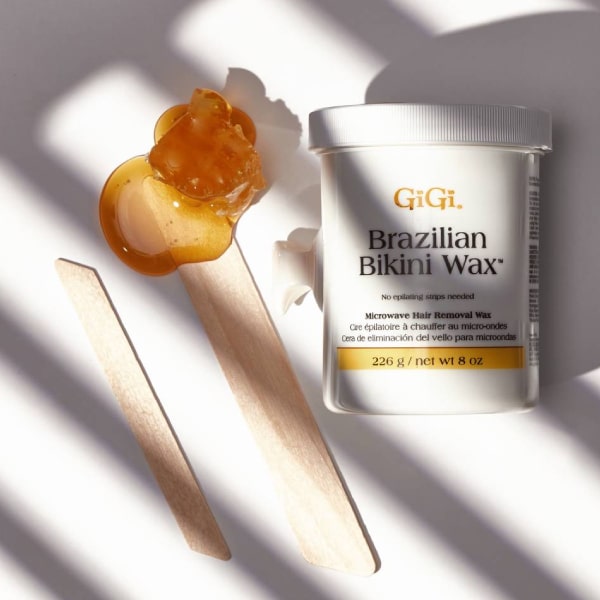
Who Is a Good Candidate for Brazilian or Bikini Waxing?
Waxing may be a good option when you want a smoother result that lasts longer than shaving and you are comfortable allowing enough hair growth for the wax to grip effectively. It is often chosen by clients who experience frequent razor irritation, prefer less daily maintenance or want a cleaner bikini line for travel, athletics or personal preference.
Good candidacy also depends on the condition of the skin. Healthy, intact skin generally tolerates waxing better than skin that is sunburned, actively inflamed, recently resurfaced or sensitized by certain medications or products.
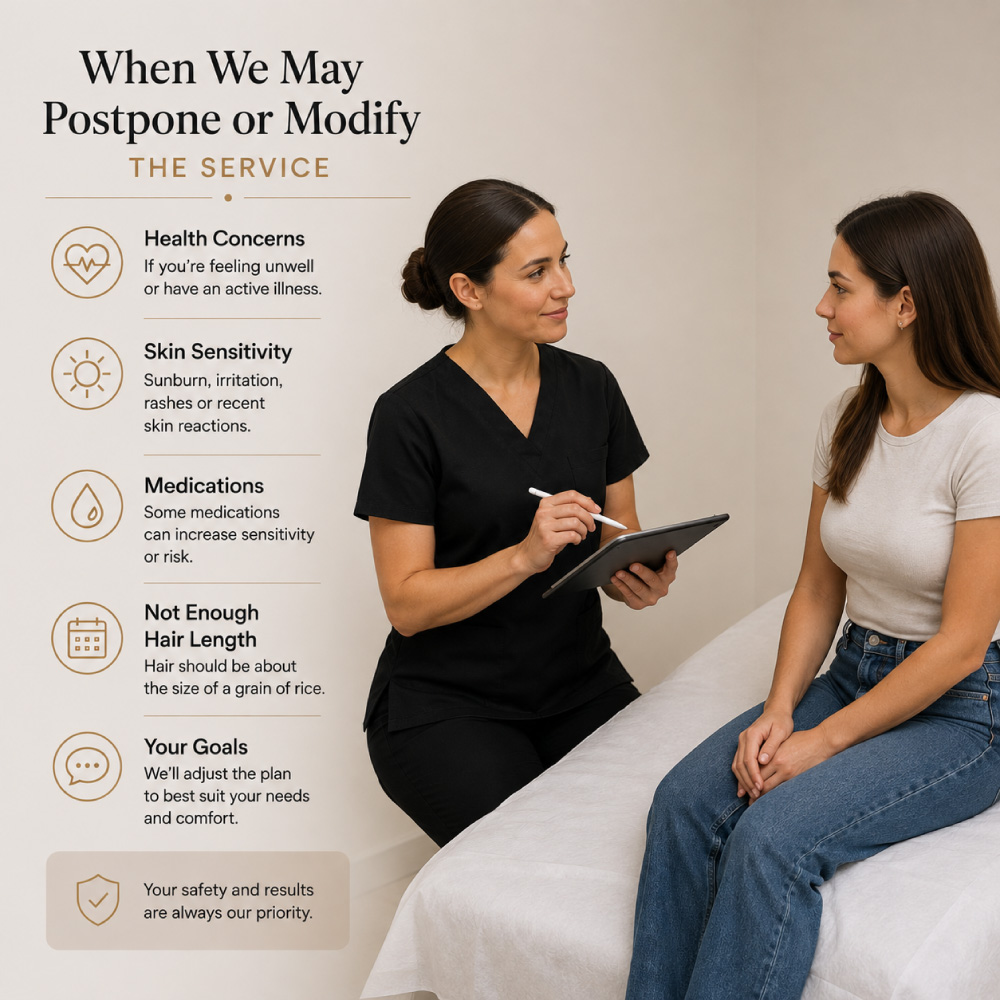
When We May Postpone or Modify the Service
Professional judgment includes knowing when not to wax. We may recommend postponing, modifying the area or seeking medical guidance when the skin is not in a safe condition for hair removal.
| Active sunburn, broken skin, open lesions, significant irritation or a current flare of a skin condition in the treatment area. |
| Recent aggressive exfoliation, chemical peel, laser treatment or other procedure that has temporarily weakened the skin barrier. |
| Use of prescription isotretinoin or another medication associated with increased skin fragility; clearance and timing should be discussed with the prescribing clinician. |
| Topical retinoids, strong exfoliating acids or skin-thinning products used on or near the area without an appropriate pause recommended by the prescribing clinician or product directions. |
| An unexplained rash, suspected infection, severe folliculitis or painful inflammation. |
| A previous serious reaction to wax, adhesives, resins or post-wax products that has not been evaluated. |
Pregnancy and menstruation do not automatically prevent waxing, but sensitivity can vary. Tell your provider about relevant health changes, medications and prior reactions so the service can be planned responsibly.
Honest Pros & Cons of Brazilian and Bikini Waxing
| Advantages | Limitations and tradeoffs |
| Hair is removed from the root, so smoothness generally lasts longer than shaving. | The service is not painless; discomfort varies by hair density, skin sensitivity, timing and individual pain tolerance. |
| Regular waxing may make regrowth feel softer or less blunt than shaved hair. | Temporary redness, tenderness, small bumps or itching can occur after waxing. |
| A customized bikini shape can be maintained without daily shaving. | Hair must be long enough for the wax to grip, which requires a period of visible regrowth between appointments. |
| Professional technique may reduce the repetitive razor friction that contributes to irritation for some clients. | Ingrown hairs can still occur, especially with friction, curly hair, tight clothing or inconsistent aftercare. |
| Appointments become more predictable when kept on a consistent schedule. | Waxing is not appropriate over compromised, sunburned or highly sensitized skin. |
| The result can be tailored from a simple bikini cleanup to full removal. | Some clients are better suited to trimming, shaving, sugaring or laser hair reduction based on skin, hair and personal preference. |

How to Prepare for Your Waxing Appointment
Preparation can improve grip, reduce unnecessary passes and make the appointment more efficient. The most important step is allowing enough growth. Hair that is too short may not release cleanly; hair that is very long can be trimmed professionally if needed.
| Allow approximately two to three weeks of growth after shaving, or enough length for the wax to grip. Do not shave immediately before the appointment. |
| Avoid sunburn and do not wax skin that is actively irritated, broken or inflamed. |
| Tell us about prescription acne medications, topical retinoids, exfoliating acids, recent peels, lasers or other skin treatments. |
| Gently cleanse the area before your visit, but avoid aggressive scrubbing or same-day exfoliation. |
| Wear clean, breathable, loose-fitting clothing to reduce friction after the appointment. |
| Plan strenuous exercise, hot tubs, saunas, swimming and intimate contact for another day when possible, because freshly waxed skin is temporarily more vulnerable to heat, sweat and friction. |
| Arrive with questions. If this is your first wax, tell us so we can explain the process and pace the service accordingly. |
Do Not Trim Too Aggressively
If you are unsure about hair length, leave it alone. Over-trimming can make the hair too short to wax, while an experienced provider can trim excess length safely before beginning.

What to Expect During the Appointment
A well-managed appointment should feel organized and respectful from the beginning. Your provider should confirm the service, explain positioning, cleanse and prepare the area, use gloves, work in controlled sections and support the skin during removal.
| Consultation and confirmation of the area and shape. |
| Skin and hair assessment, including growth direction and visible contraindications. |
| Cleansing and preparation of the treatment area. |
| Application and removal of wax in small sections using a technique appropriate to the area and hair. |
| Tweezing of limited stray hairs when appropriate rather than repeatedly waxing the same sensitized spot. |
| Application of a suitable post-wax product and clear aftercare instructions. |
The appointment may feel uncomfortable, particularly during a first Brazilian wax or when the hair is dense. The intensity usually occurs in short moments rather than continuously. Communication matters: tell your provider if you need a pause, feel excessive heat or experience a sharp sensation that feels different from expected hair removal discomfort.
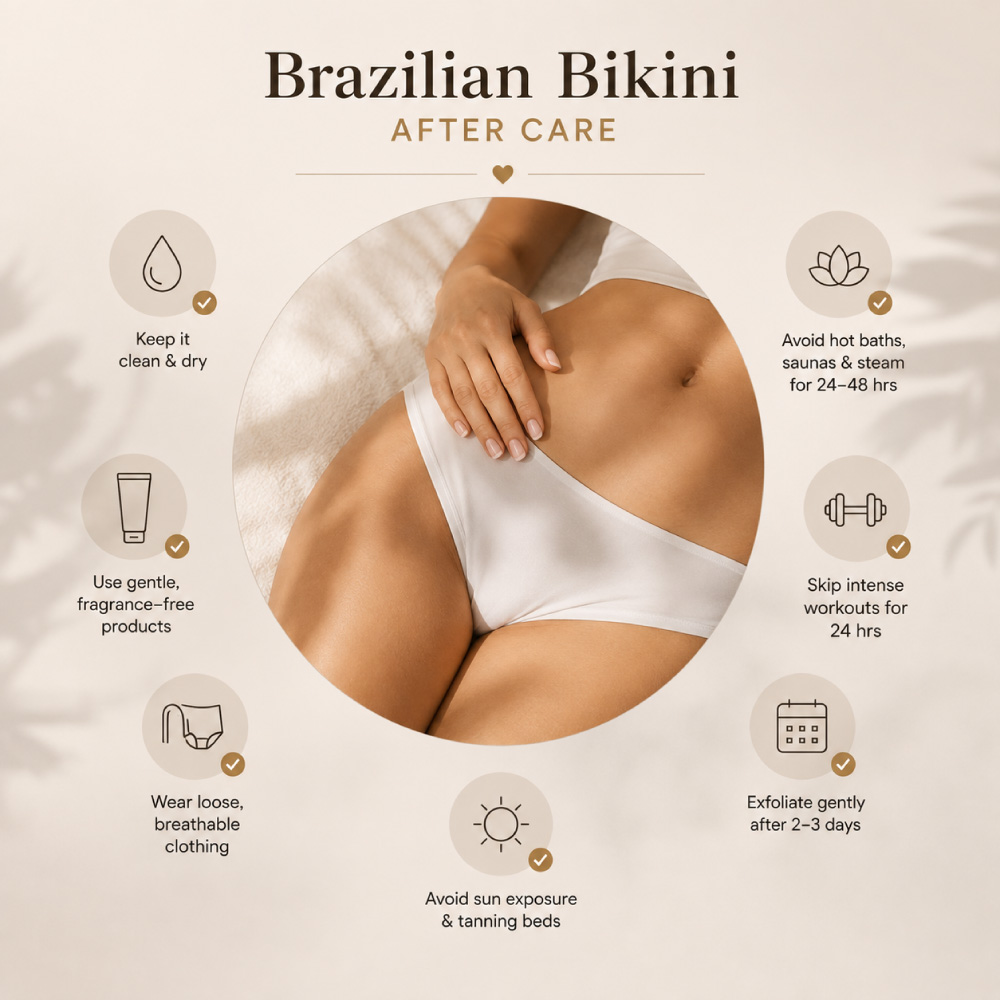
Brazilian Wax Aftercare: The First 24 to 48 Hours
Freshly waxed skin may be temporarily red, warm, tender or bumpy. The immediate goal is to minimize heat, sweat, friction and unnecessary contact while the skin settles.
| Wear loose, breathable clothing and clean underwear. |
| Avoid hot baths, hot tubs, saunas, steam rooms and very hot showers. |
| Postpone strenuous exercise and activities that create heavy sweating or friction. |
| Avoid swimming in pools, lakes or ocean water until initial sensitivity has resolved. |
| Avoid intimate contact if the skin is tender or irritated. |
| Do not scratch, pick, scrub or apply heavily fragranced products to the area. |
| Use only the soothing aftercare recommended for your skin and service. |
Mild redness and small bumps can be normal shortly after waxing. Seek medical advice for severe or worsening pain, spreading redness, significant swelling, pus, drainage, fever or other signs of infection.
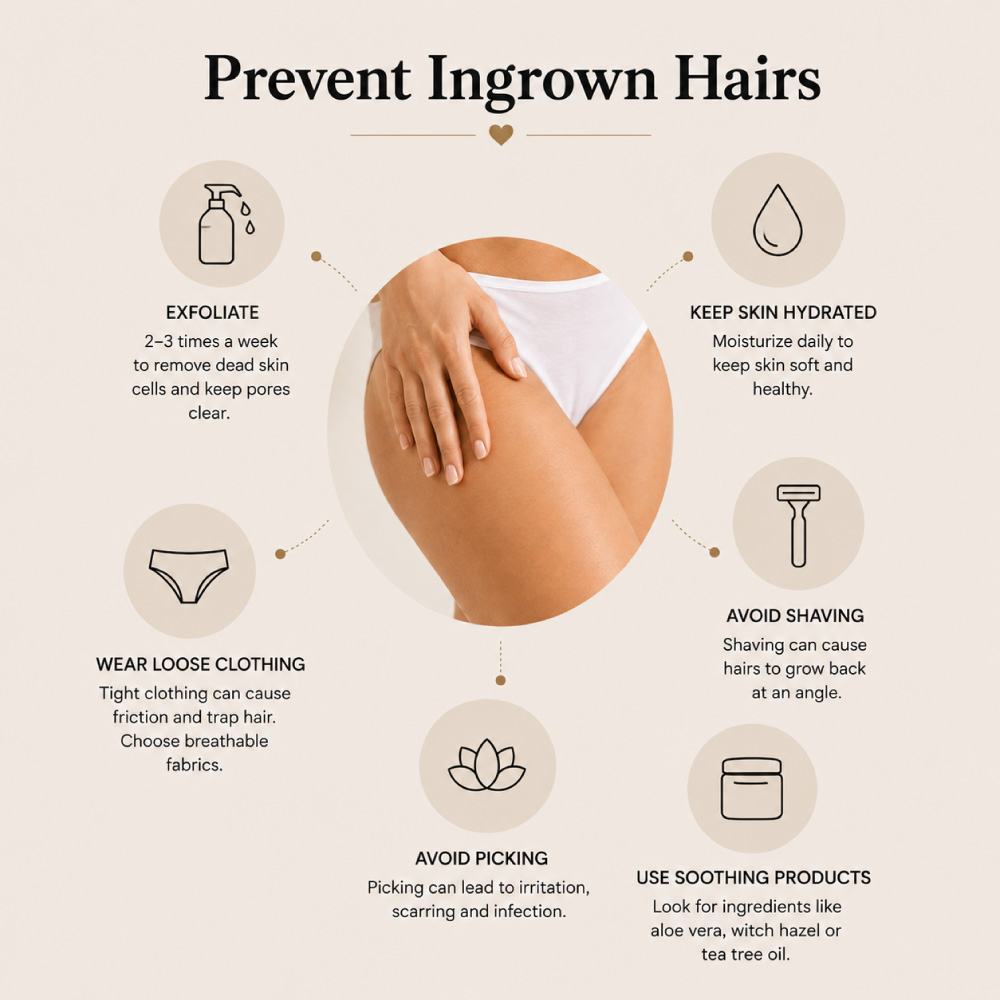
Preventing Ingrown Hairs Without Over-Exfoliating
Ingrown hairs occur when a growing hair becomes trapped or curves back into the skin. Waxing does not guarantee that ingrowns will disappear, and aggressive exfoliation can create more inflammation rather than solving the problem.
Once the skin is calm—often after the first 48 hours, depending on sensitivity—introduce gentle exfoliation according to your provider’s recommendation. The best routine is usually consistent and moderate: clean skin, controlled exfoliation, non-occlusive hydration and less friction. Picking or digging at bumps increases the risk of discoloration, scarring and infection.
Clients with persistent painful bumps, recurrent folliculitis or significant dark marks should discuss the pattern with a dermatologist or qualified medical professional rather than repeatedly treating inflamed skin at home.
How Long Does a Brazilian Wax Last?
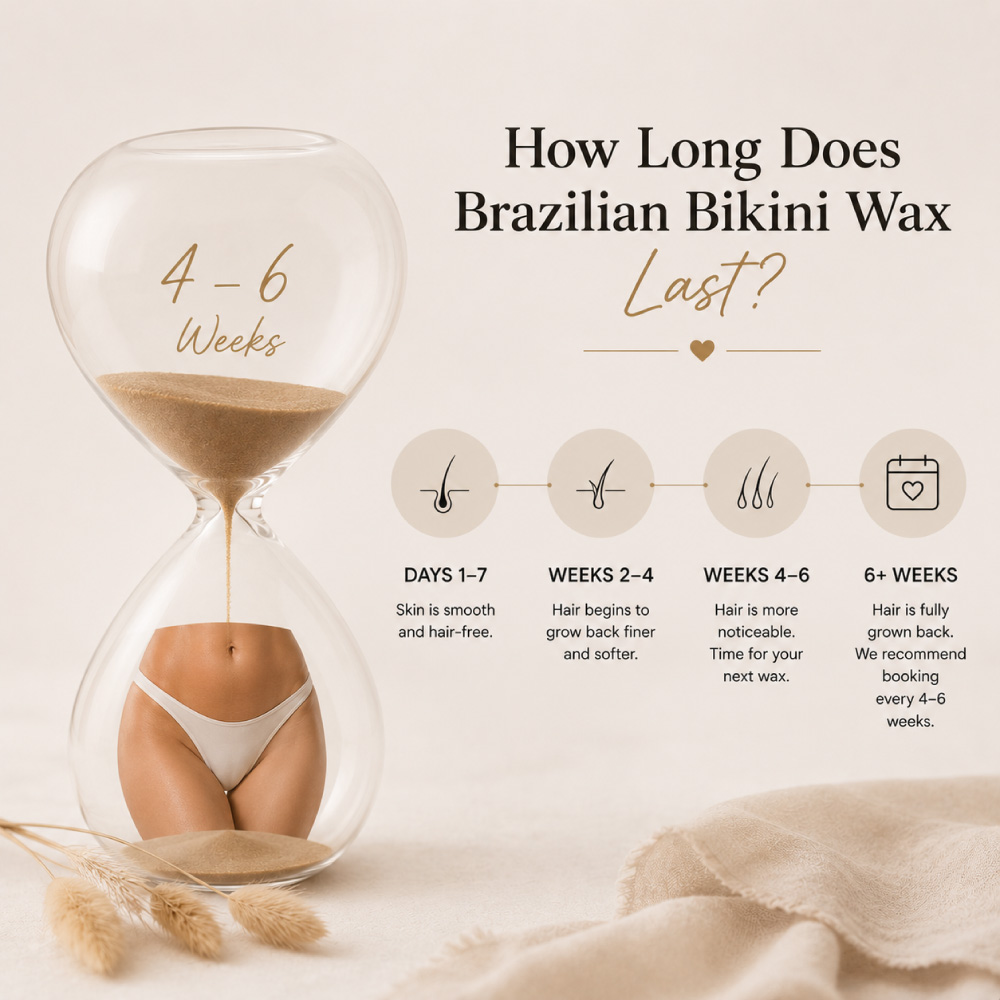
Many clients notice approximately three to four weeks of smoother skin, although visible regrowth varies by individual hair cycle, density, hormones, prior shaving and consistency. Not every hair is in the same growth stage during a single appointment, especially after years of shaving, so early appointments may show uneven regrowth sooner than later appointments.
A consistent schedule—often around four to six weeks—allows enough regrowth for effective removal while helping the service become more predictable. Your provider should recommend timing based on how your hair actually returns rather than forcing every client into the same interval.

Your First Brazilian Wax: What Clients Are Often Surprised By
| The consultation is usually more straightforward and clinical than anticipated. |
| Position changes are practical and brief; a professional provider should explain them clearly. |
| Discomfort comes in short intervals and varies substantially from one section to another. |
| Temporary redness does not automatically mean the skin has been injured. |
| The first regrowth cycle may feel less uniform because hair grows in different phases. |
| Consistent appointments are typically easier to plan than alternating between shaving and waxing. |
| The most important aftercare is often simple: reduce heat, sweat, friction and picking. |
Brazilian Waxing, Shaving and Laser Hair Reduction
| Consideration | Waxing | Shaving | Laser hair reduction |
| How hair is addressed | Pulled from the root | Cut at skin level | Targets follicles over a series of treatments |
| Typical upkeep | Every few weeks | Often every few days | Multiple sessions plus possible maintenance |
| Immediate result | Smooth once temporary redness settles | Smooth immediately but short-lived | Gradual reduction rather than instant complete removal |
| Regrowth requirement | Hair must be allowed to grow between appointments | No growth period required | Usually requires shaving while avoiding root-removal methods during a treatment series |
| Best fit | Clients wanting longer smoothness without a device-based treatment plan | Clients prioritizing speed and at-home control | Clients seeking longer-term reduction and appropriate candidacy |
Waxing During Your Period, Pregnancy or Sensitive Times
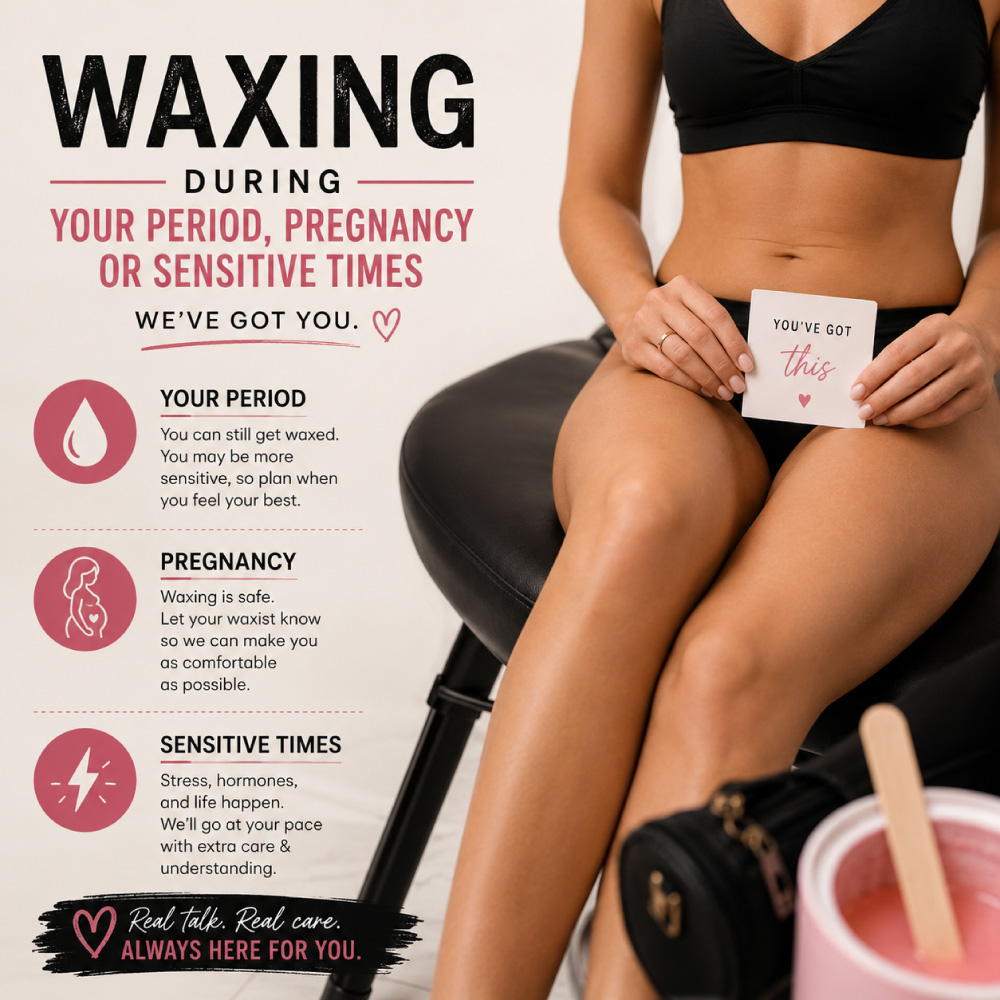
Waxing can often be performed during menstruation if you are comfortable and use appropriate hygiene protection, but some clients feel more sensitive around that time. Pregnancy also does not automatically exclude waxing, although skin sensitivity and positioning needs may change. Always disclose relevant health information and ask your medical provider when you have condition-specific concerns.
A professional provider should not make medical promises or dismiss unusual symptoms. When the skin or health history creates uncertainty, postponing and obtaining medical guidance is the responsible choice.
Frequently Asked Questions (Brazilian Bikini Wax)
How long should hair be before a Brazilian wax?
Hair should be long enough for the wax to grip—commonly around one-quarter inch or roughly two to three weeks of growth after shaving. If you are unsure, avoid trimming immediately before the appointment.
What is the difference between a bikini wax and a Brazilian wax?
A bikini wax generally cleans the hair visible outside a standard underwear or swimsuit line. A Brazilian removes substantially more from the front and intimate areas, with the option to remove everything or leave a chosen shape.
Does a Brazilian wax hurt?
A Brazilian wax is uncomfortable for most first-time clients, but the intensity varies by pain tolerance, hair density, skin sensitivity and section. The discomfort occurs in brief moments, and clear communication helps the provider pace the service appropriately.
How long does a Brazilian wax last?
Many clients remain noticeably smoother for about three to four weeks, but regrowth timing varies. A consistent four-to-six-week schedule is common once the hair cycle becomes more predictable.
Can I get waxed during my period?
Often, yes, if you are comfortable and use appropriate hygiene protection. Some clients feel more sensitive during menstruation, so individual comfort and salon policy should guide the decision.
Can I get a Brazilian wax while pregnant?
Pregnancy does not automatically prevent waxing, but skin sensitivity and positioning may change. Disclose your pregnancy and ask your obstetric clinician about any condition-specific concerns.
What should I avoid after a Brazilian wax?
For the first 24 to 48 hours, avoid excessive heat, heavy sweating, friction, hot tubs, saunas, swimming, scratching and strongly fragranced products while the skin calms.
How can I reduce ingrown hairs?
After the initial sensitivity settles, use gentle, consistent exfoliation and non-occlusive hydration as recommended by your provider. Avoid picking. Persistent or painful bumps should be evaluated by a medical professional.
Can I wax while using retinol or prescription acne medication?
Some retinoids and prescription acne medications can increase skin fragility. Tell your provider exactly what you use and where. Do not stop prescription medication without consulting the prescriber; waxing may need to be postponed or medical clearance obtained.
Should I shave between waxing appointments?
Shaving between appointments disrupts the waxing schedule and creates mixed hair lengths. For more predictable results, allow the hair to regrow and return at the interval recommended by your provider.
Why Choose Avissa Salon for Brazilian & Bikini Waxing?
At Avissa Salon, Brazilian and bikini waxing is centered on comfort, privacy, precision and skin safety. Each service is customized to your preferences and skin condition, with clear communication, careful sanitation, controlled technique and practical aftercare guidance to help support a smooth, comfortable result.
Related Links & Services
Discover additional services that complement your appointment and help you achieve your beauty goals.