

Hair Extension Maintenance
Hair Extension Care • Ann Arbor, MI
A practical, method-specific care plan for protecting your natural hair, preserving the extension hair and keeping the result comfortable, polished and believable between salon visits.
The Installation Creates the Result. Maintenance Determines How Long It Stays Beautiful
Beautiful hair extensions are not a one-day service. The installation creates the initial result, but the weeks that follow determine whether the extensions remain comfortable, blend naturally and protect the hair supporting them.
At Avissa Salon, maintenance begins before the first strand or weft is installed. We consider your natural density, hair color, haircut, scalp condition, washing schedule, workout routine, preferred hairstyles and ability to return on time. Those details influence the method, weight, placement and maintenance interval we recommend.
The goal is not to make extensions feel effortless by pretending they require no work. The goal is to give you a routine that is realistic, repeatable and appropriate for your specific system. Tape-in hair extensions, nano bead hair extensions and hand-tied weft hair extensions do not share identical attachment points, so their care should not be treated as interchangeable.
Our maintenance philosophy is simple: protect the attachment, reduce unnecessary friction, keep the scalp and roots clean and dry, detangle before small tangles become mats, and never ignore discomfort.
What Does Hair Extension Maintenance Include?
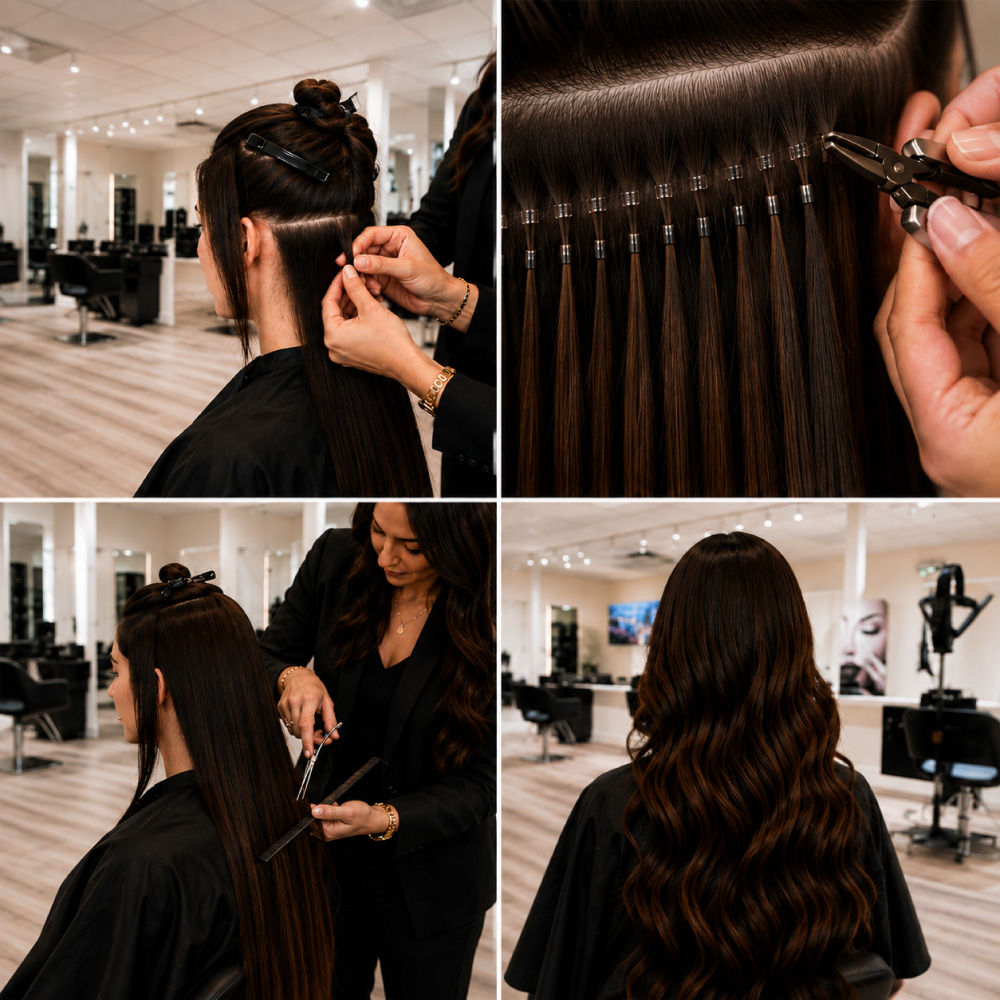
Professional maintenance is more than moving the extensions closer to the scalp. A thorough appointment may include evaluating the scalp and natural hair, removing or opening the existing attachments, separating naturally shed hair, detangling the root area, cleaning or replacing attachment materials, repositioning the extensions, checking weight and tension, refining the blend and discussing changes in home care.
Not every set should be reinstalled exactly as it was. Natural density can change, shedding may be seasonal, the haircut may have grown out, and the extension hair may lose density or softness over time. A responsible specialist reassesses the plan rather than mechanically repeating it.
Why Maintenance Timing Matters
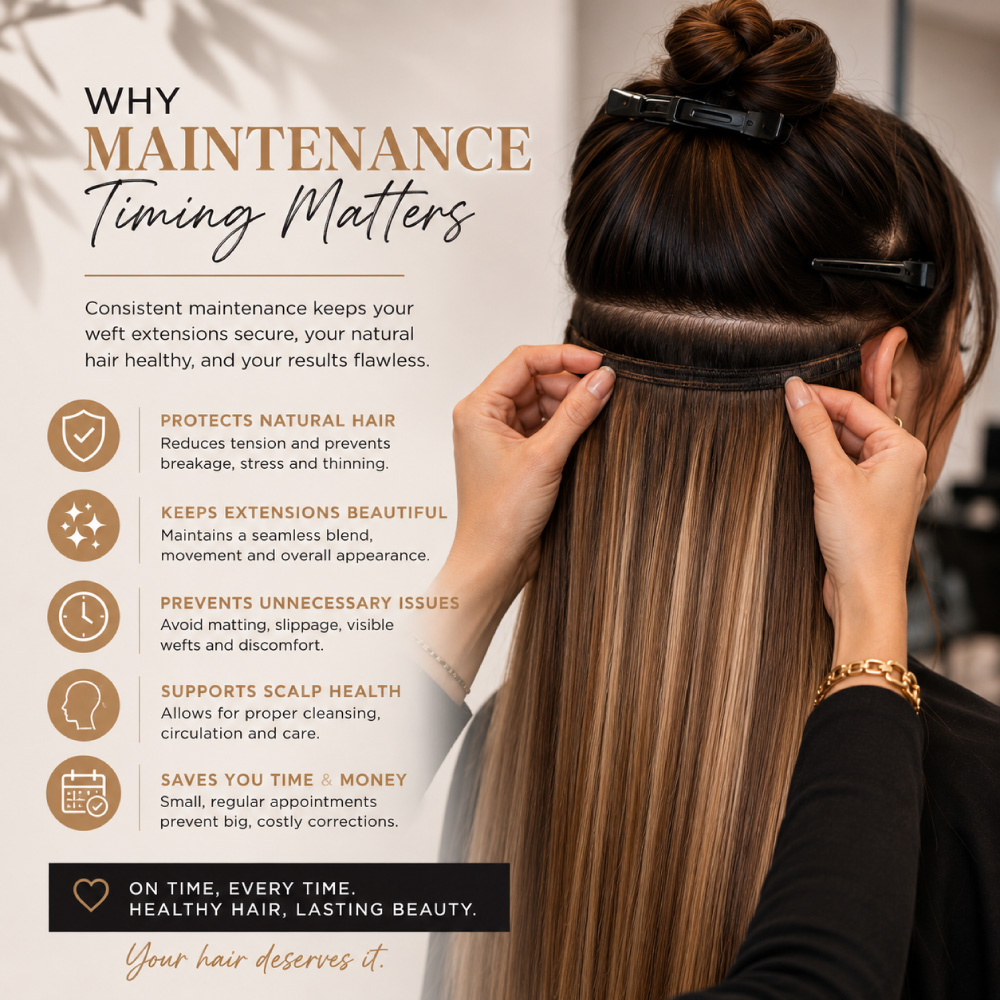
As natural hair grows, the attachment moves farther from the scalp. That extra distance allows more movement, twisting and tangling at the root. It also changes how the weight is carried. Waiting too long can increase matting, visible attachments, pulling and unnecessary stress on the natural hair.
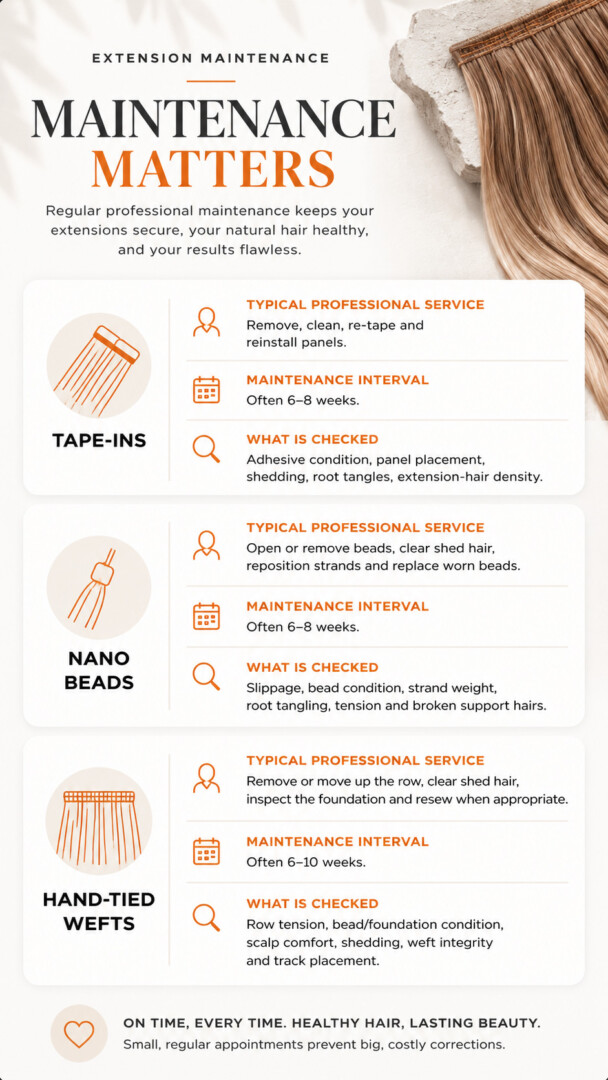
There is no universal maintenance date that is right for every guest. Many clients return within a six-to-eight-week range, but the correct timing depends on growth rate, density, shedding, method, section size, attachment condition and home care. Some guests need earlier service; others can safely go longer. Follow the schedule provided after your installation rather than the most convenient date on the calendar.
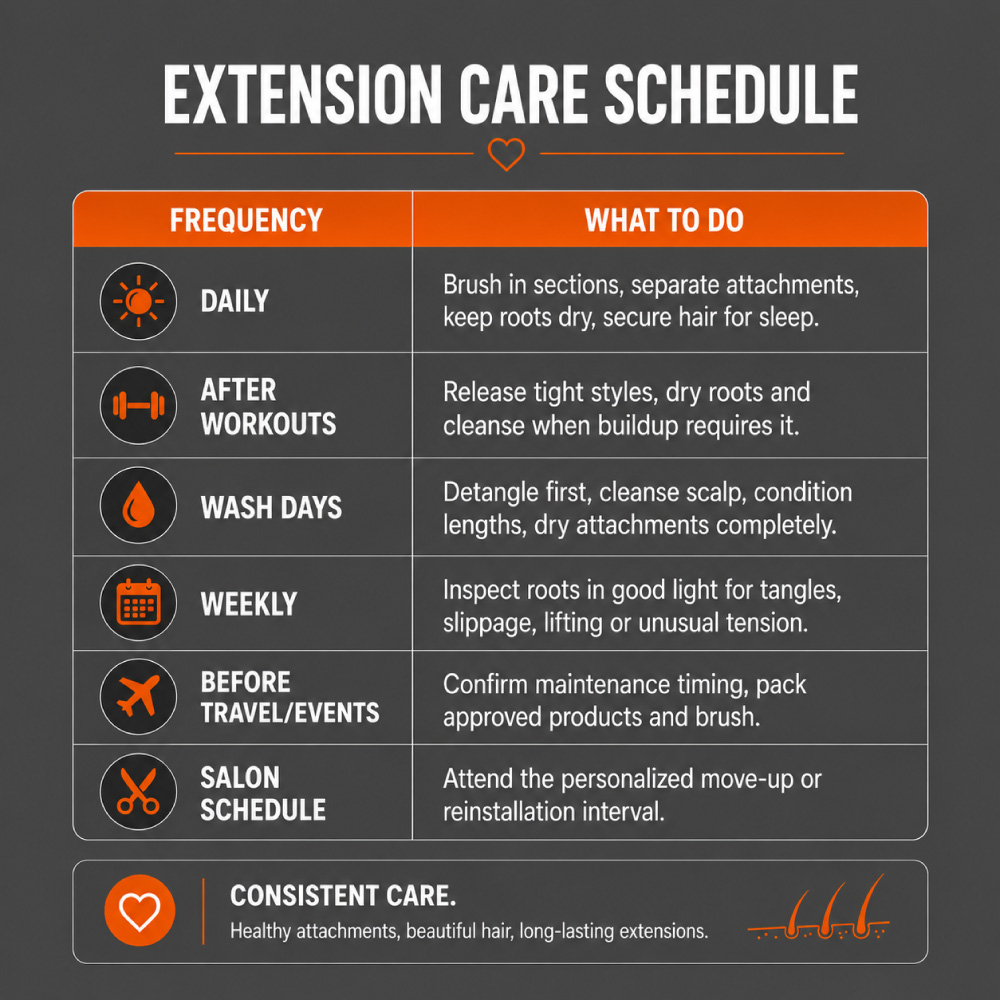
Daily Care: The Five Habits That Matter Most
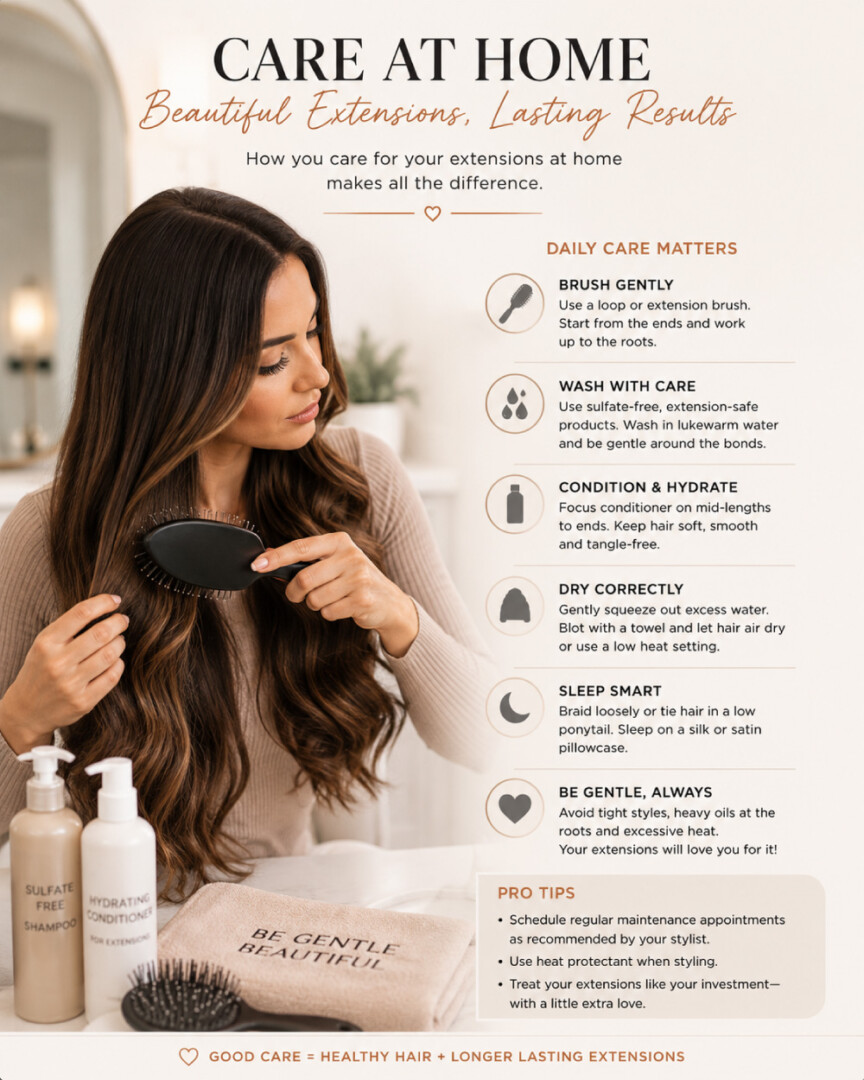
| 1. | Brush the roots and lengths with control: Support the attachment area with one hand and brush from the ends upward in sections. Use the brush recommended for your system. The goal is to remove tangles without dragging across tape tabs, beads or weft tracks. |
| 2. | Separate the attachments: Once a day, gently feel through the root area and separate neighboring attachments or rows. This simple habit helps prevent shed hairs from wrapping around adjacent bonds and forming mats. |
| 3. | Keep the roots dry: Dry the scalp and attachment area completely after washing, swimming or heavy sweating. Damp roots left compressed for long periods can encourage tangling, odor and deterioration of some attachment materials. |
| 4. | Protect the hair while sleeping: Never sleep with wet extensions. Detangle, make sure the roots are dry, and secure the hair in a loose braid or low ponytail with a soft tie. A silk or satin pillowcase can reduce friction but does not replace brushing and drying. |
| 5. | Keep heavy oils away from the attachment point: Conditioners, masks, serums and oils belong primarily on the mid-lengths and ends unless your specialist instructs otherwise. Concentrated product at tape tabs can weaken adhesion; heavy buildup around beads and weft foundations can make the root area difficult to cleanse and maintain. |
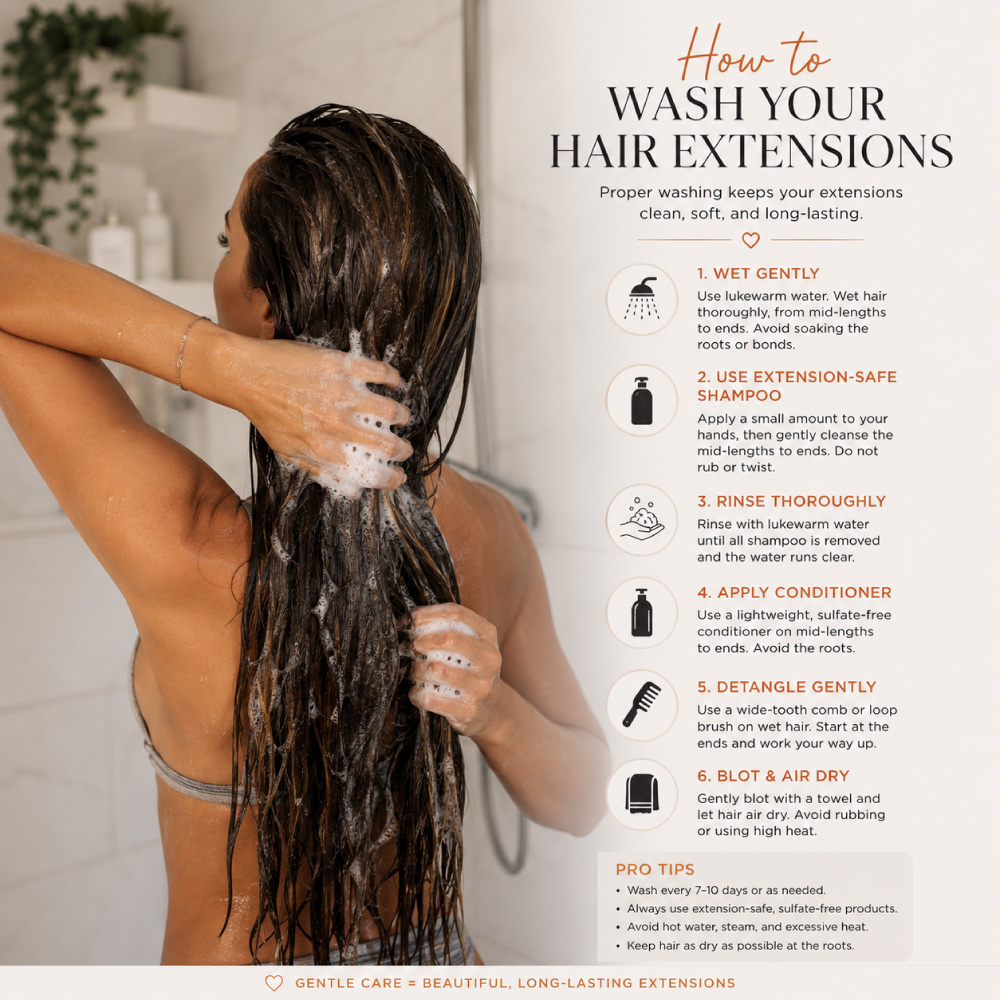
How to Wash Hair Extensions Correctly
Washing should clean the scalp without roughening the attachments or tangling the lengths. The exact products and frequency depend on your scalp, hair color, method and lifestyle, but the technique is consistent.
| • | Detangle before entering the shower. |
| • | Stand upright; avoid flipping the hair over and scrubbing it upside down. |
| • | Apply shampoo to the scalp and between rows or attachments using the pads of your fingers. Do not scratch with nails or pile the lengths on top of the head. |
| • | Rinse thoroughly. Product left near the roots can contribute to buildup and irritation. |
| • | Apply conditioner or mask to the mid-lengths and ends, keeping it away from attachment points unless specifically approved. |
| • | Squeeze out water with a towel; do not twist or rub the hair aggressively. |
| • | Dry the roots and attachments first, then the lengths. Use controlled airflow and a moderate temperature. |
The Sulfate-Free Myth
“Sulfate-free” is not a complete quality standard. Some sulfate-free shampoos leave heavy conditioning residue, while some professionally formulated cleansers rinse clean and perform well. Choose products by formulation, your scalp needs, hair color and extension method—not by one marketing phrase on the front label.
How Often Should You Wash Hair Extensions?
Wash often enough to keep the scalp clean, but not so often that the lengths are repeatedly exposed to unnecessary friction, heat and swelling. Many guests do well with two or three washes per week, but frequent exercise, an oily scalp, medical scalp conditions or heavy product use may require a different schedule.
Dry shampoo can be useful between washes, but it is not a replacement for cleansing. Repeated layers of powder, oil and sweat can create buildup around attachments. Apply sparingly, avoid saturating tape tabs or bead openings, and wash it out regularly.
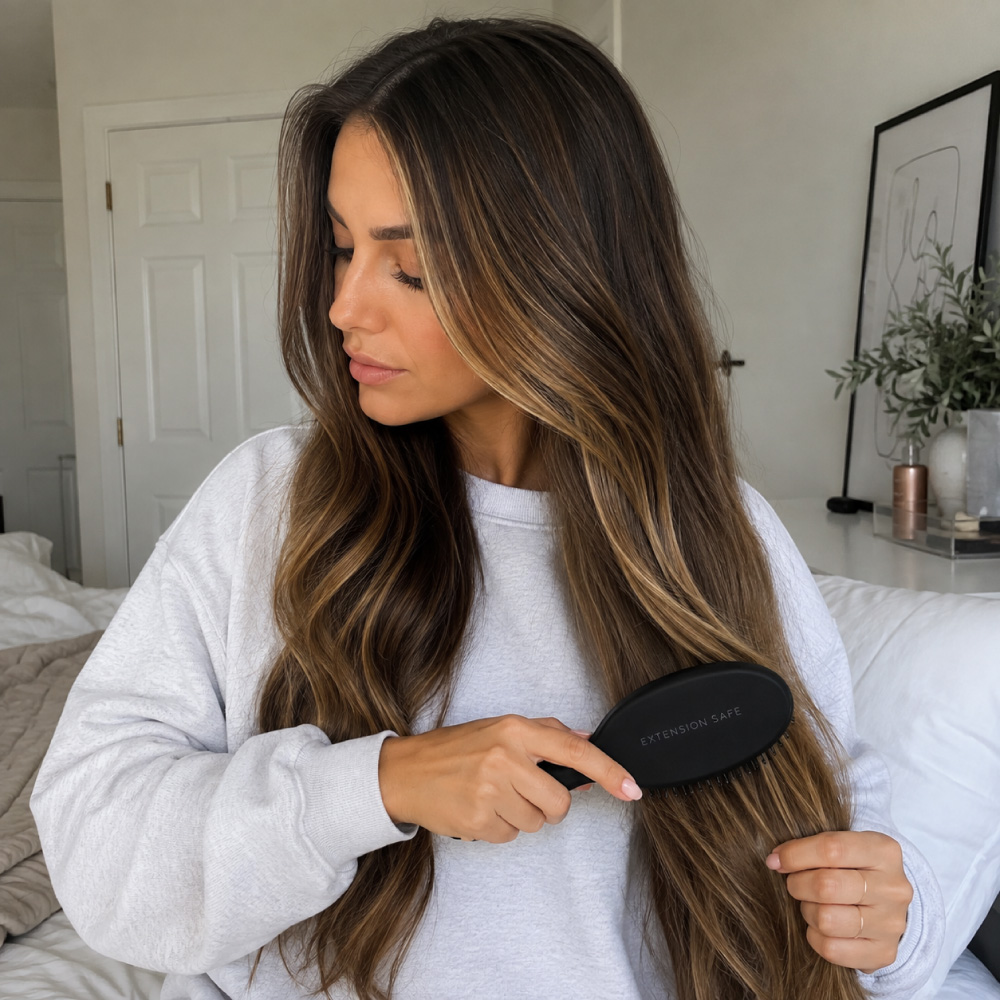
Brushing Without Pulling or Matting
The most common brushing mistake is only smoothing the visible surface. Extensions can look polished on top while tangles develop underneath and near the roots.
| • | Divide the hair into manageable sections. |
| • | Support the attachment area while brushing the lengths. |
| • | Begin at the ends, work through the mids, then approach the roots with the appropriate tool. |
| • | Brush underneath the rows and between attachment zones rather than only over the top layer. |
| • | Do not repeatedly scrape a standard brush directly across tape tabs, beads or sewn tracks. |
| • | If a root tangle will not release gently, stop and contact the salon. Pulling through it can break the natural support hairs. |
Sleeping With Hair Extensions
Friction and uncontrolled movement during sleep can roughen the cuticle, tangle the lengths and wrap shed hairs around attachments. Before bed, confirm that the hair is completely dry, detangle it and secure it loosely. Avoid tight topknots that place repeated tension on the same attachments.
Silk or satin can reduce friction, but no pillowcase prevents matting when the roots are wet, the hair is not brushed or maintenance is overdue.
Working Out and Sweating
Hair extensions are compatible with an active lifestyle, but sweat changes the maintenance burden. Secure the hair in a low braid or ponytail that does not pull against the placement. After exercise, release the style, allow the scalp to cool and dry the attachment area. If the scalp is oily or salty, cleanse it rather than repeatedly adding dry shampoo.
High ponytails, tight buns and helmets can repeatedly press or pull on specific areas. Your consultation and haircut should account for the way you actually wear your hair—not only how it looks down in the salon.
Swimming, Saunas and Vacations
Chlorine, saltwater, sunscreen, heat and prolonged moisture can affect extension hair and attachment materials. Before swimming, detangle the hair and secure it in a braid. Some guests benefit from wetting the lengths with clean water first and applying a light, extension-safe leave-in to the ends, but keep oily products away from the roots and attachments.
After swimming, rinse promptly, cleanse when needed, condition the lengths and dry the roots completely. Do not leave extensions wet in a bun. Sunscreen transfer can discolor some light extension hair, particularly around the neckline, so wash hands after applying sunscreen and avoid rubbing it into the hair.
Plan maintenance around major travel, weddings and events. It is better to service extensions before a long trip than to let overdue attachments twist, mat or become visible while you are away.
Heat Styling and Blow-Drying
Human-hair extensions can usually be blow-dried, curled and straightened, but they do not receive protective oils from the scalp in the same way growing hair does. Excessive heat can shorten their usable life and make the ends dry or brittle.
| • | Use heat protection appropriate for extensions and color-treated hair. |
| • | Keep hot tools away from tape adhesive and avoid clamping directly onto beads or sewn tracks. |
| • | Use the lowest temperature that produces the desired result. |
| • | Dry the attachment area before concentrating on the lengths. |
| • | Avoid repeatedly restyling the same sections every day. |
| • | Replace extension hair when loss of density or fiber condition prevents a polished finish; do not keep reusing hair simply because it can still be attached. |
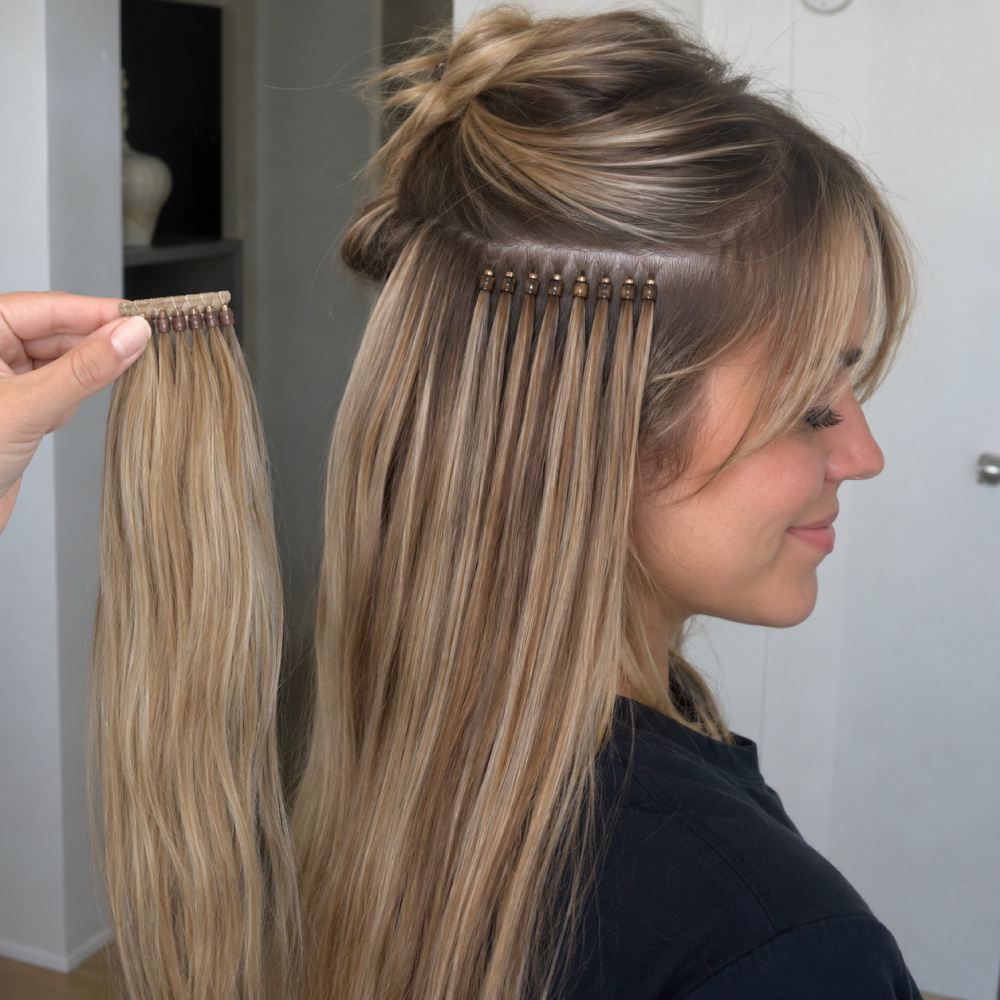
Hair Color and Extension Maintenance Must Be Planned Together
Hair color maintenance affects extension placement, shade matching and service timing. Root touch-ups, gray coverage, highlights, balayage, toners and glosses may require access around or beneath the attachments. The most efficient plan is coordinated before the appointment rather than improvised after the extensions are installed.
We may recommend refreshing your hair color before a move-up or removing selected attachments to protect the extension hair and achieve clean placement. Hair Extension can sometimes be toned or darkened conservatively, but aggressive lightening can compromise it. Accurate color matching and a coordinated schedule are safer than trying to correct a poor match later.
Guests with blonde hair or dimensional color should expect the natural hair and extension hair to fade differently. Toners, mineral buildup, purple shampoo, heat and sun exposure can shift the two fibers at different rates. Bring changes to our attention before they become a difficult correction.
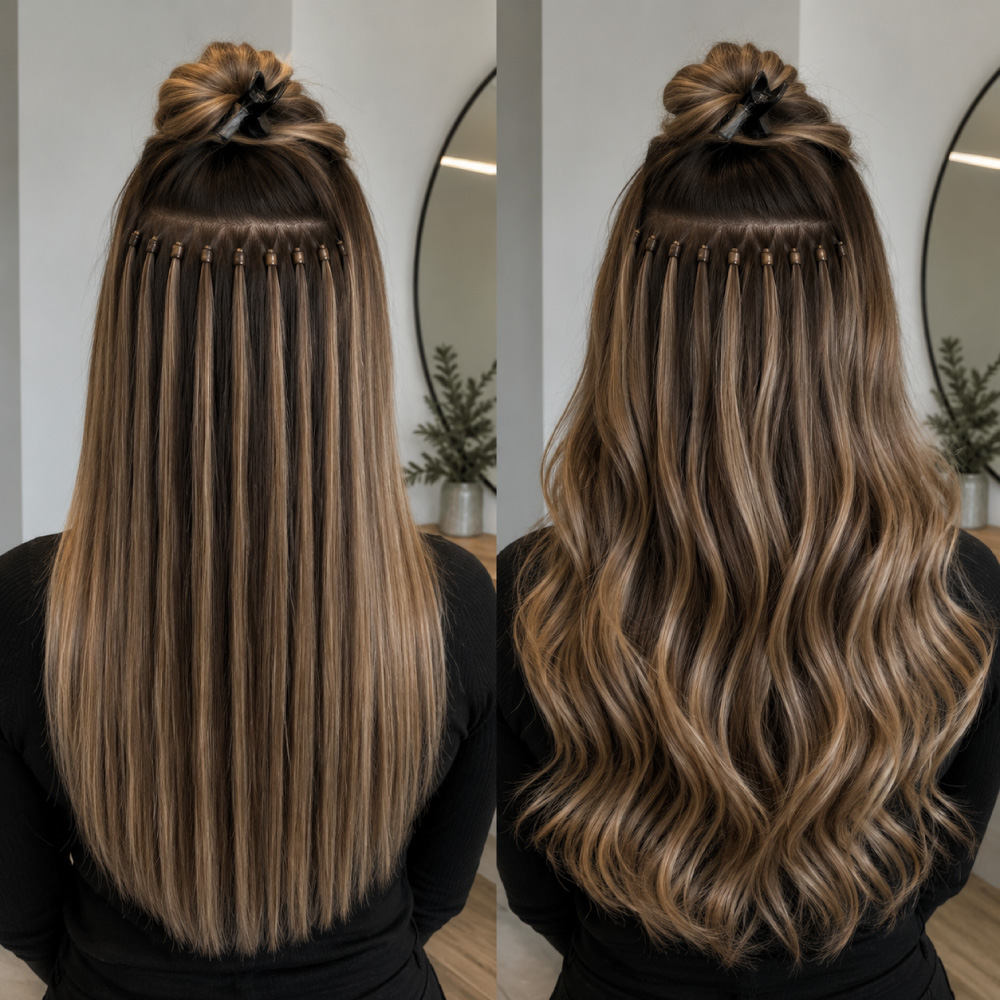
Why the Haircut Still Matters at Every Move-Up
A technically secure installation can still look disconnected when the haircut has grown out. Natural layers shorten relative to the extension hair, the perimeter can become thin, and the transition between the guest’s hair and the extensions may become more visible.
At maintenance appointments, we assess whether the haircut still supports the extension design. A conservative blending haircut may remove bulk, refine the perimeter and restore movement. The purpose is not to thin the extension hair indiscriminately; it is to create a believable transition while preserving enough density for the intended result.
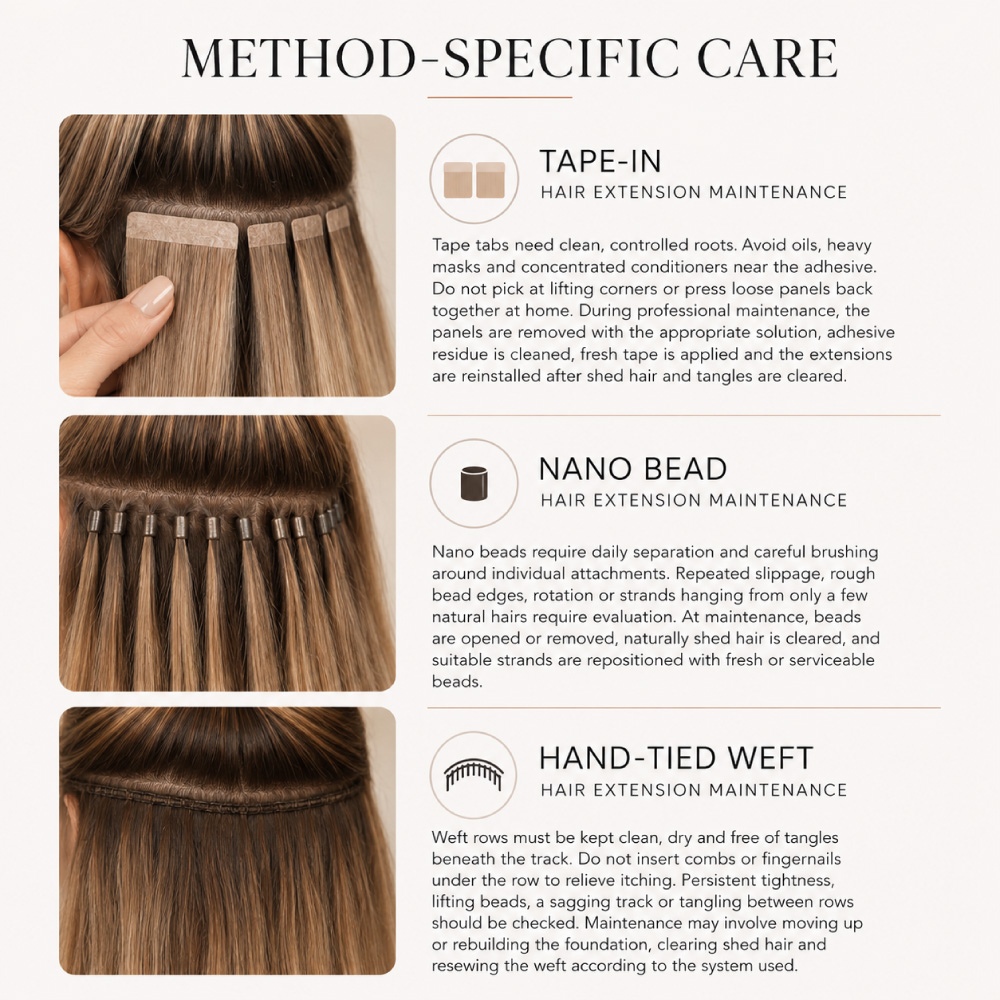
Method-Specific Care
Tape-In Hair Extension Maintenance
Tape tabs need clean, controlled roots. Avoid oils, heavy masks and concentrated conditioners near the adhesive. Do not pick at lifting corners or press loose panels back together at home. During professional maintenance, the panels are removed with the appropriate solution, adhesive residue is cleaned, fresh tape is applied and the extensions are reinstalled after shed hair and tangles are cleared.
Explore: Tape-In Hair Extensions →
Nano Bead Hair Extension Maintenance
Nano beads require daily separation and careful brushing around individual attachments. Repeated slippage, rough bead edges, rotation or strands hanging from only a few natural hairs require evaluation. At maintenance, beads are opened or removed, naturally shed hair is cleared, and suitable strands are repositioned with fresh or serviceable beads.
Explore: Nano Bead Hair Extensions →
Hand-Tied Weft Hair Extension Maintenance
Weft rows must be kept clean, dry and free of tangles beneath the track. Do not insert combs or fingernails under the row to relieve itching. Persistent tightness, lifting beads, a sagging track or tangling between rows should be checked. Maintenance may involve moving up or rebuilding the foundation, clearing shed hair and resewing the weft according to the system used.
Common Mistakes That Shorten Extension Life
| • | Skipping or postponing move-up appointments. |
| • | Sleeping with wet hair or damp attachment points. |
| • | Only brushing the surface and ignoring the roots. |
| • | Applying oils, masks or sunscreen directly to attachment areas. |
| • | Using very hot tools every day without heat protection. |
| • | Wearing the same tight ponytail or bun repeatedly. |
| • | Leaving sweat, chlorine or saltwater in the hair for long periods. |
| • | Using excessive dry shampoo instead of cleansing. |
| • | Attempting to tighten, re-tape, reclamp or remove extensions at home. |
| • | Continuing to reuse extension hair after it has lost too much density or integrity. |
Signs Your Extensions Need Professional Attention
| • | Persistent pain, headaches, burning or localized tenderness |
| • | Redness, sores, scabbing, swelling or drainage |
| • | Root matting that does not separate gently |
| • | Several tape panels or strands slipping in a short period |
| • | Beads rotating, opening, flattening incorrectly or developing rough edges |
| • | A weft row sagging, twisting or pulling unevenly |
| • | Attachments hanging from only a few natural hairs |
| • | Sudden or unusual shedding |
| • | Visible breakage or thinning around attachments |
| • | Odor or moisture that remains trapped near the roots |
| • | Extension hair becoming severely tangled, brittle or thin |
Do not assume pain is part of “getting used to” extensions. Mild awareness after installation can occur, but sharp, persistent or worsening discomfort should be evaluated promptly. A salon consultation cannot diagnose a medical condition; unexplained hair loss, scalp disease or sudden shedding should be assessed by an appropriate healthcare professional.
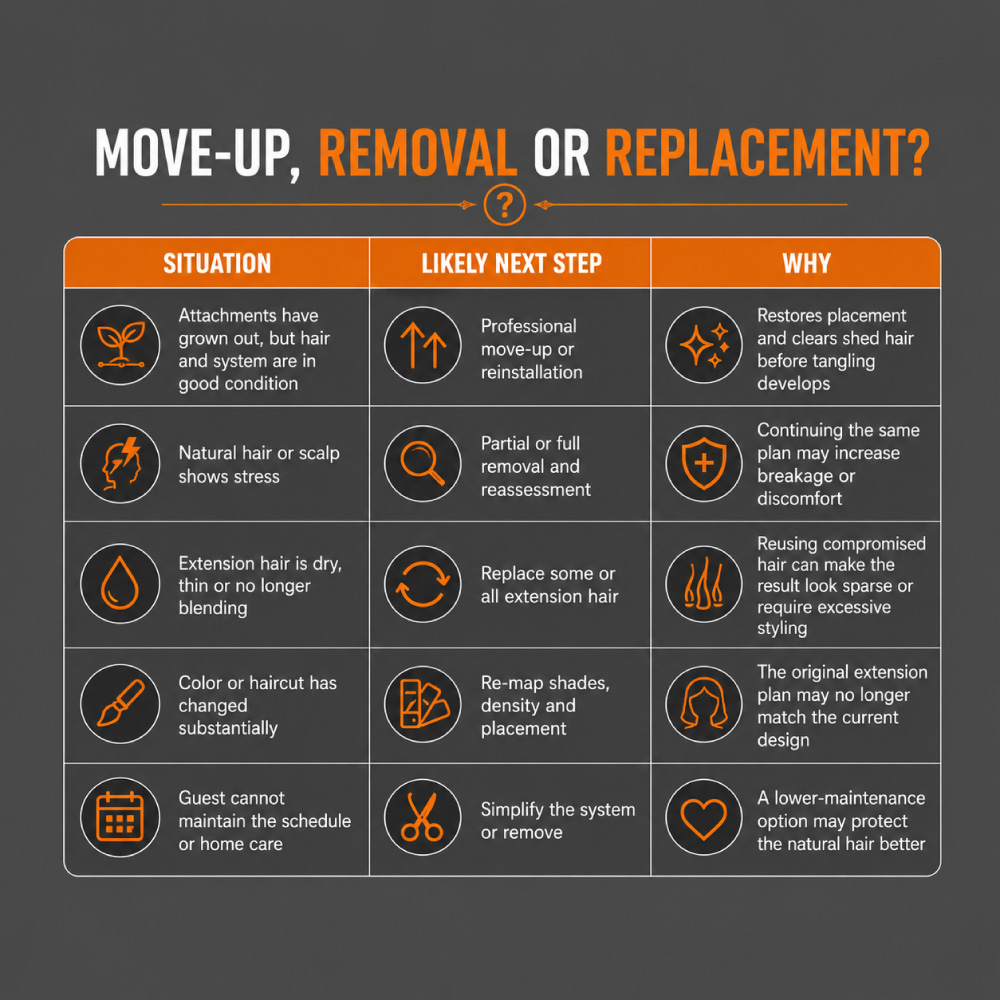
A Simple Weekly Maintenance Rhythm
Frequently Asked Questions (Hair Extensions Maintenance)
How often do hair extensions need maintenance?
Many semi-permanent extension systems are serviced approximately every six to eight weeks, while some weft installations may vary. Growth rate, density, shedding, method and home care determine the correct interval. Follow the schedule given by your specialist.
Can I wash my hair normally with extensions?
Yes, but technique matters. Detangle first, wash upright, cleanse the scalp without piling the lengths, keep heavy conditioner away from attachment points and dry the roots completely.
Can I sleep with wet hair extensions?
No. Sleeping with wet roots or damp attachment areas increases tangling and matting and can affect attachment materials. Dry the hair completely and secure it loosely before bed.
What brush should I use?
Use the brush recommended for your extension method. It should detangle the lengths while allowing controlled brushing around attachments without pulling or scraping them.
Can I use oil on hair extensions?
A small amount of an approved serum or oil may be used on dry mid-lengths and ends. Avoid applying oily products to tape tabs, bead areas or weft foundations unless your specialist specifically approves them.
Why are my extensions slipping?
Slippage can result from buildup, excessive oil, section size, attachment wear, product placement, frequent manipulation or an installation issue. A few isolated slips may occur; repeated slippage should be evaluated.
Can I swim with hair extensions?
Yes, with disciplined care. Detangle and braid the hair, rinse after swimming, cleanse as needed, condition the lengths and dry the roots completely. Chlorine, saltwater and sunscreen can increase wear and color shift.
Can I work out with hair extensions?
Yes. Secure the hair without excessive tension, dry the roots after sweating and cleanse the scalp often enough to prevent buildup. Repeated tight styles can stress specific attachments.
Can I color my hair during a maintenance appointment?
Often, but the sequence must be planned. Root color, gray coverage, balayage, highlights and toners may require selected attachments to be removed or repositioned. Coordinate color and extension appointments in advance.
How do I know when extension hair needs replacement?
Replace it when it has lost too much density, softness or integrity to blend and style well. The number of previous installations is less important than the current condition of the hair.
Should I remove my extensions at home?
No. Professional removal uses method-specific tools and products and includes careful separation of naturally shed hair. Home removal can pull, cut or break the natural hair.
What should I do if my extensions hurt?
Contact the salon promptly. Sharp, persistent or worsening pain, redness, sores or swelling should not be ignored. If symptoms suggest a medical scalp issue or unexplained hair loss, seek appropriate healthcare evaluation.
Related Links & Services
Learn more about Hair Extensions and discover additional services that complement your appointment and help you achieve your beauty goals.